
Giving Her All, Part 1 of 2

Two days ago, Mary and I took the dogs to the beach as usual. It was a chilly, overcast day in the 40’s, and we were bundled in fleece jackets, long pants, socks and shoes. I had a down vest on, too, but was still cold. The stoning was good, though, and as the dogs romped, we walked the water line looking for treasures left by winter storms.

Suddenly, without our notice, an elderly woman appeared right in front of us, startling both of us. We’d never seen her before, and she presented a peculiar picture in a long winter coat, babushka and tennis shoes, dragging two half-full, black garbage bags along the sand, as well as a white plastic bag filled with paper trash. Though her steps were small and slow, she was bent with determination.

Because she walked directly up to us I said, “We’re collecting stones. What are you collecting?”

Without pausing as she passed she said, “Raked leaves. It’s easier to drag them on the sand than on the road.”

“Where did the leaves come from?” I said.

“My last job.”

“Where was that?”

“Up there,” she said, nodding toward the houses on the dune.

We walked alongside her, fascinated. “Where are you taking them?” Mary said.

“I’m going to stow my gear at my next job.”

“Where’s that?”

“Down that way,” she said, tipping her head toward the creek.

We reached for the heavy bags saying, “Let us help you.” But she yanked them toward herself saying, “No.” How could this woman, in her 70’s, be employed to rake leaves and dispose of them? It didn’t make sense.

Mary said, “You won’t be able to cross the creek today. It’s too wide and is over your knees. You’ll get your shoes and pants wet.”

The woman kept trudging along. “My feet are hot and could use a cooling off.”

She made it clear she didn’t want our help, so we found a spot to sit, waiting to see what would happen. Suddenly she dropped her bags and said, “I forgot my rake.”

Turning around, she slowly walked back the way she came, traveling the length of two football fields before disappearing in the bluff grasses. “I’ll bet she won’t be back for her garbage,” I said.
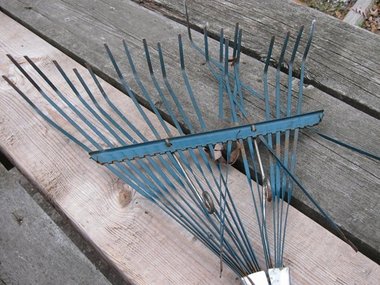
But 15 minutes later we saw her dark form reappear, heading our way. Sure enough, she was dragging an ancient rake with claw-like tines. When she reached her bags, she gathered them up with difficulty after adding the rake to her burdens,  and resumed her steady march toward the creek. As she approached the rushing water, she paused, struggled to raise her bags up high, then stepped in, shoes and all.

Half way across she stumbled and fell face-first into the water. All but the top of her rounded back went under, and she didn’t move.

(…continued tomorrow)

“Do not neglect to show hospitality to strangers, for thereby some have entertained angels unawares.” (Hebrews 13:2)


A Word from Rebecca Lutzer

I’ve always wondered what life would be like as a pastor’s wife, particularly when the pastor has thousands in his congregation. My good friend Rebecca, wife of Pastor Erwin Lutzer of Moody Church, agreed to share a few thoughts on this subject in tonight’s blog.

“I’ve been a pastor’s wife for 35 years, and our family has had challenges like any other. ‘Living in a fish bowl’ produces its own unique stresses and demands. A dear older lady in our first pastorate told me, ‘Just be yourself.’ That was a little scary, but it turned out to be good advice.

“I grew up in the Dallas area in a dysfunctional family of extreme poverty but had a long-term dream of becoming a missionary nurse. God had a different plan, however, and I married a promising young professor/preacher. Because I’d told God I didn’t want to marry a pastor, I thought the Lord had made a mistake.

“Being shy and feeling inferior to other women, I was unprepared for the role and thought God was asking me to do the impossible. But in reality he was asking me to overcome these obstacles and learn to show hospitality, mercy and kindness to others.

“I struggled against the tendency to be like Martha in the New Testament, wanting everything to be just right for guests. I fretted over what others thought of my home and family, wondering how I could serve them with grace. Eventually I realized the state of my heart was more important than the state of my home, and I learned to set aside my Martha-tendencies and become more like Mary, sitting at Jesus’ feet.

“There have been times when I’ve resisted God’s will for me. I’ve made mistakes and have had heart-struggles with stubbornness anger, doubt, ungratefulness and pride. Over the years God dealt mercifully with me, teaching me from Scripture that he ‘resists the proud but gives grace to the humble.’ (James 4:6) And how wonderful it is that he always forgives.

“Having a solid, strong, loving marriage doesn’t prevent disagreements, disappointments and misunderstandings. As with most marriages, we came from different backgrounds, birth orders, and personalities. We’ve learned to encourage each others’ successes and gifts, give each other space and time to grow, and cherish those traits that are endearing.

“Our lives haven’t gone exactly as we thought they would, and some of our hopes and dreams will never happen. We wouldn’t  choose some of the experiences God had in mind for us, especially those involving pain and tragedy. But God works all these things together for good in our lives, and he always knows what’s best. The key to success in any marriage is being willing to deny our rights in order to serve each other. God wants us to forgive, even as we’ve been forgiven.

“Erwin and I have chosen a life verse to guide our marriage:

“Be kind to one another, tenderhearted, forgiving one another, as God in Christ forgave you.” (Ephesians 4:32)

Looking Back, Part 2 of 2

Yesterday I shared three things I wish I could go back and do differently in reference to Nate’s 42 days of cancer. Here are six more.

My hope is that these will be of practical help for anyone currently traveling with a loved one on the difficult journey of terminal illness:

4.  I wish I’d taken many more pictures of Nate before he got so physically depleted it was awkward to do so. With only six weeks of cancer, we had only three of acceptable picture-taking time.

5.  By the time I realized I didn’t have all the answers about our shared paperwork and tax stuff, it was too late to get them. Confusion began to pepper our conversations unexpectedly, and we weren’t sure if what he was telling us was accurate. His help with answers to my brother’s questions about his law practice (and there were hundreds) was non-existent after day #25. It would have been a blessing to all of us to have concentrated on these questions almost immediately.

6.  I regret not asking Nate, “Is there anything I’ve said or done that is standing between us and needs to be settled?” Of course I would need to have had thorough preparation by the Holy Spirit to be ready for his answer and the difficult discussion that might have followed. But this is a good question for any wife (or husband) to ask any time. It might be especially important as death is on the horizon.

7.  Pulling out old photo albums would have been a rewarding way to use precious together-moments. Counteracting the darkness of terminal cancer, family pictures would have prompted laughter and light-hearted remember-when’s. During those moments when neither of us knew how to cope, it would have been a welcome lift from miserable circumstances.

8.  When we say goodbye to any loved one, whether it’s after a shared meal or a week’s vacation together, we usually make it a point to say thank you. When we’re about to say goodbye because of death, thank you’s are doubly important. I wish I’d thought back to the endless kindnesses Nate had shown me, then talked about them, thanking him again and again. It would have made for sweet conversation.

9.  As soon as we discovered Nate was not going to live much longer, I viewed him as fragile and touched him accordingly. Looking back, it would have been lovely to have had more husband-wife time in private during the early days. I didn’t realize how quickly there would be other eyes and ears in the room helping us, but also watching and listening, making intimate moments impossible.

More and more I find myself looking forward, but I hope this look back can be useful to someone who’s still in the middle.

“The Lord will keep your going out and your coming in from this time forth and forevermore.” (Psalm 121:8)