
Monsters in the Night

Everybody has a bad night once in a while, and last night was my turn. Worries and what-if’s kept me awake, and we all know that daytime problems grow into monsters during the night.

Although I looked up at the night sky through my headboard windows, the stars twinkling there didn’t calm my fears as they usually do. I tried to quote Scripture but couldn’t think of anything appropriate. Praying only re-listed the problems and brought me back to square one: heart-pounding anxiety.

I knew a measure of optimism would arrive with the dawn, so I kept checking the sky for light. When it finally came, a new concern took over: how was I going to get through a busy day without having a night’s sleep?

My college president said, “Never doubt in the dark what God has shown you in the light.” That sounds pretty good, except that apprehension gobbles up resolve like Pac Man gobbles up dots, and middle-of-the-night fears easily overwhelm spiritual logic.

It isn’t that I was doubting God’s sovereignty or his ability to protect my loved ones, answer my prayers or solve my problems. It’s that the small troubles had grown larger than common sense. During the night when I was awake, common sense had gone to sleep.

Now, as I’m writing this, it’s dark again, and another bedtime approaches. Although most nights bring sweet sleep, tonight I’m uneasy because of last night. A worry-wart frame of mind doesn’t testify to God’s sufficiency, though, and besides that, it’s no fun.

So I decided to be proactive and run to God in the daytime as preparation for the next bad night. The saints of old must have had trouble with nighttime fears too, because what I found in stories about them wobbling in their confidence was that God reminded them again and again of how he’d come through in their past. For example, he mentioned Pharaoh chasing them but “the sea engulfing their enemies.”

I personalized that, remembering victories in my own life when circumstances were bleak and God came through. I also latched onto some of his pertinent promises: “I have redeemed you; I have called you by name; you are Mine!”*

God told me he was abiding in and around me, and that he was watching over me because I was more important to him than the animals he created. He reminded me I was his adopted daughter and encouraged me to call him “Abba”, Daddy. And he said, “I love you, and perfect love casts out fear.” **

Tonight I’m ready. I’m going to bed with a weapon under my pillow: printed Scripture verses that speak to my specific worries. It’ll be almost like having my head in God’s lap.

” Peace I leave with you; My peace I give to you; not as the world gives do I give to you. Do not let your heart be troubled, nor let it be fearful.” (John 14:27)

* Isaiah 43:1    ** 1 John 4:18

Tantalizing Fantasizing

Every widow friend of mine has wished her husband could come back, if only for a few minutes. We’ve all fantasized about how we would greet them, what we’d say, how we’d show love. Such a scenario is as captivating as a first date, and although we all know it can’t be, thinking about it is delicious.

This morning I was pondering the biblical Lazarus, a friend Jesus often stayed with between destinations. He enjoyed time with this pal and his two sisters, probably relaxing around a lamp-lit wooden table, telling of his travels. These four singles were close in heart and surely had fun together, too. Scripture twice says Jesus loved them.

When Lazarus got sick, the grieving sisters did what came naturally: they got word to Jesus. But Lazarus died before he could get there.

When Jesus finally came, Mary, Martha and a crowd of mourners had been grieving for four days. No doubt the sisters were thinking, “Oh, how we want our brother back, even for just a few minutes. He left so quickly we couldn’t even get Jesus here in time. If only we could talk with him again, hold onto him, somehow prevent his death.”

When Jesus arrived, Martha raced out to meet him with the same wish my widow friends and I have. “Jesus, you can do whatever you want! You could bring him back!” Although I haven’t met Martha, I know what she was thinking: “If you bring him back, you can heal him, and then he won’t have to die!”

But Jesus responded conservatively, reminding Martha that Lazarus would rise eventually. That wasn’t good enough for her, though. I picture her tugging on his arm, bouncing up and down saying, “Yes, yes, I know, but you know what I mean!”

Jesus calmly asked if she truly believed he was the way to heaven, and she says, “Yes, of course! I believe you! But…”

Racing back to the house, she grabs Mary and excitedly says, “Jesus is here! Hurry up!”  And it’s Mary’s turn to rush out. While weeping, she voices the same longing as Martha but in a different way. “You could have prevented this! And you should have!”

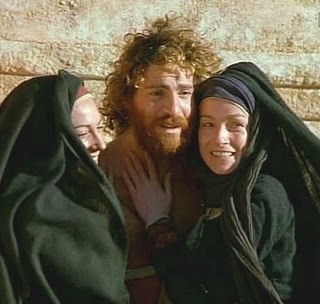
Amazingly, Jesus gave the sisters what they wanted: their brother back.

What was life like for these siblings after that? Martha and Mary probably didn’t take their eyes off Lazarus, couldn’t stop asking questions. Most likely they touched him, took his hand, hugged him, told him they loved him, until he had to say, “Ok, girls. Enough already!”

I’ll bet they loved their brother with a nearly perfect love after having lost him, then gotten him back. How blessed they were with that rare opportunity to love flawlessly the second time around. And that’s what my widow friends and I long for, too, though we know it won’t happen for us.

But if wives could just get that second-chance love figured out the first time around, marriages could be radical examples of what God originally had in mind for husbands and wives.

Jesus called in a loud voice, “Lazarus, come out!” (John 11:43)

Onions of Gold

When I was young I thought studying the Bible was for older folk. But after having children, I needed its insights and became a devotee.

Eventually I saw the Bible as an exceptional, one-of-a-kind book, becoming convinced it had supernatural powers and multi-layered meanings. As a child I’d heard adults say that studying Scripture was like peeling an onion. As soon as you learn one interpretation, there’s another waiting beneath it.

Now, after decades of sermons and studies, I can vouch for that. No matter how many times I read a specific verse and think I understand it, suddenly a brand new meaning “shows” as if I’d never read it before. That must be one of the reasons it’s called the “living” Word.

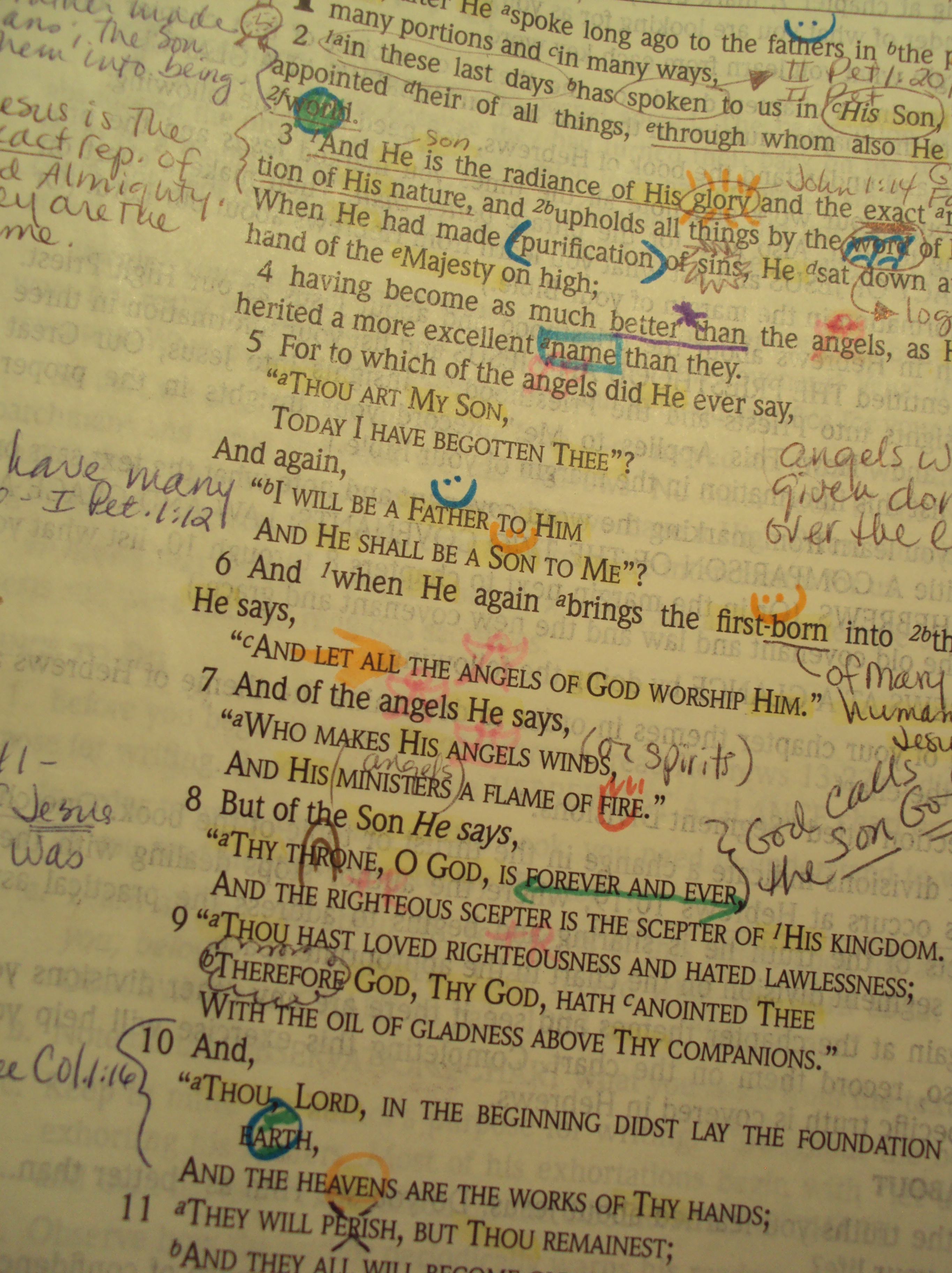
This happened not too long ago as I was reading Hebrews. Although I studied this biblical book for a year, marking meaningful verses with colored pens while learning hundreds of new things, this time God peeled away one more layer revealing a bit more scriptural gold.

Hebrews 1 is God’s description of how his Son Jesus is better than the angels, detailing how they were not born of the Father as Jesus was. To prove the high position of his Son he says, “Let all the angels worship him.” (v. 6)

And right after that came the biblical gold. In a passage where he called Jesus by his name and rank, “my begotten Son,” suddenly he calls him “God”. It’s the Father acknowledging his Son as God.

I’d never registered this dramatic statement and was astounded to hear God say this. It demonstrated the closely intertwined relationship he had/has with his begotten Son.

That one phrase also hints at the devastation of the Father when his God-Son left heaven for earth, separating the two of them in a way they hadn’t yet experienced.

That statement rumbled around in my brain for a long time. I’m thinking of it still.

In this same chapter, God tells us Jesus is “the exact imprint of his nature.” (v. 3) In other words, one is as much God as the other. The Father is giving us a peek into the mystery of the two of them being one, which is another onion of gold whose multiple layers have yet to be peeled.

There must be thousands if not millions of layered bits of glittering biblical gold, and as long as I live, there will be no end to them.

So many onions. So little time.

“Of the Son, [God] says, ‘Your throne, O God, is forever and ever’.” (Hebrews 1:8a)