
Till the end of time, Part II

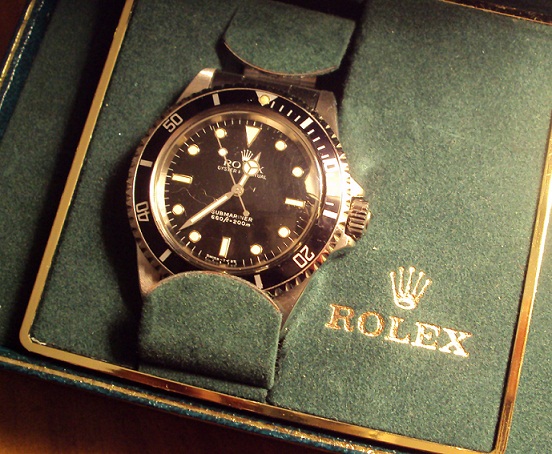
Nate loved his stainless steel Rolex watch and got an uptick of pleasure whenever he checked the time. He wore it on his right wrist rather than the traditional left, but one day I noticed he wasn’t wearing it at all. When I asked why, he said, “Its at Peacock’s, being cleaned.”

Several weeks after that, his wrist was still empty. When I asked about it he said, “I have it, and its working fine. But I’ve been wondering if I should wear it again.”

“What do you mean?”

“Well, these days it seems ostentatious,” he said.
I was surprised. He’d loved receiving it, wearing it, setting it on the dresser every night. Then why the change of heart? Since he’d started wearing it, much had happened in the real estate and legal worlds, and his thriving business had shriveled to nothing because of governmental law changes. The fact that his partner had suffered a debilitating stroke and never returned to work didn’t help either. His rapidly rising income had plummeted, and we were scrimping at home. When Nate looked at the big picture, a Rolex was out of place.

Of course I was well acquainted with our over-the-cliff financial picture, but I hadn’t put all the pieces together. The radical changes affected all of us, but they were upsetting Nate the most. His business persona was being overhauled, his finances ruined, his work hours increased and his tension level off the charts.

One night as we settled into bed, I told him I was impressed with his decision to let the Rolex go. It had been thrilling to receive it and satisfying to wear it, but gradually he saw it as inappropriate, and I saw that as wisdom. Although Nate would not have said he’d been humbled by his losses, that’s how I saw it. And it was good… at least spiritually-speaking. His decision to put the watch in a drawer right then somehow made me love him more.

God was working on Nate and on all of us through the raw circumstances of a business failure. We, his family, didn’t look at it as his personal failure but simply as the demise of a company by way of circumstances he couldn’t control. I wished he could view it that way, but instead he beat himself up and called it a debacle. Part of him never got over it.

Making big money can do funny things to people, and the worst of it is becoming dependent on dollars rather than God. Dollars often grow wings and fly away, because the Lord loves us too much to let us continue believing money-dependency is good.

Nate learned, in a miserable way, that big bucks can disappear, but he also learned that God always remains. After the “fall” and a period of despondency, he joined a church small group, began sharing openly with other men and related to the Sunday sermons in new ways. Although it was a painful reminder of our situation to eat soup for dinner every night for a while, Nate would say after it was all over that he was closer to the Lord and also to me.

Financial deficiencies never entirely disappeared, but Nate’s struggle ended completely on November 3, 2009, financially and in every other way. God had humbled him, and when he deemed the time was right, he lifted him up… way up… to a place where a Rolex isn’t needed.

“Humble yourselves, therefore, under God’s mighty hand, that he may lift you up in due time.” (1 Peter 5:6)

Till the End of Time, Part I

Nate once gave me a Rolex watch worth $5000. When I later lost it, I felt awful. Twenty-five years ago, the only people who were given gold watches had earned them by working forty years at the same institution. Retirement and the watch came together. I hadn’t done a thing to deserve such a fine gift. As always, Nate had been generous to his wife but not to himself, buying the watch he wished he had, for me. His own watch came from Walmart.

When I tried to think of some way to show my remorse over losing the watch, my only idea was to buy a Rolex for him. But I didn’t work outside our home and had no paycheck. The weekly allowance he gave me worked well to manage our household, but the dollars were all spoken-for. The only answer was to save a little here and there until I had enough.

It took me several years, but the day finally came when I counted $2500 in my plump envelope of bills. I drove to Peacocks Jewelry Store feeling like a Depression-era child finally able to buy her dream bicycle.

As the salesman spread out the few Rolex designs my money would buy, I chose the one that most resembled his cheaper watch, but of course this one would be a real Rolex. Before I left the store, I asked if they could engrave something on the back:

“I’ll love you till the end of time. Your Meg, Christmas, 1985.”

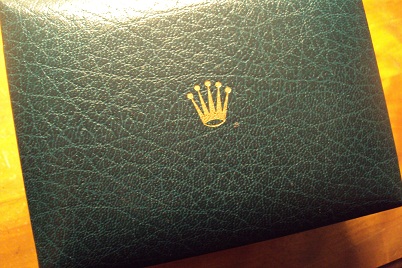
Although men are often difficult to buy for, I couldn’t wait for Christmas morning. When it finally came, my gift was the hit I’d hoped it would be. Nate was dumbfounded when he saw the Rolex box, then delighted all over again to find I hadn’t just used my empty box for something else but had put the real thing inside. When he turned over the watch and saw the message, he was grateful for my expression of timeless love.

God also testifies of his deep love for us with an engraving. He’s carved us on his palms. In an effort to impress us with the depth of his loving bond, he compares a nursing mother and her baby to his relationship with us and asks, “Can a mom forget her nursing child?”

I nursed all my babies. When I’d go out for an evening, leaving the baby at home, my body would continue to produce milk just as if the baby was consuming it. Sometimes so much milk accumulated that when I got home, I’d pick up my sleeping infant and coax him or her to have an unscheduled meal, just to relieve the pressure. For this reason, no nursing mother can forget her baby.

The Lord says he feels that way toward us, saying even in the unlikely case a nursing mother should forget, he never will. To prove it, he engraved us on his palms.

Nate’s watch has been set aside now. I still love him but only from afar. The good news about God’s engraved promise is that his love doesn’t have a stopping point. He won’t ever abandon us, become disinterested or forget about us.

Not ever.

“Can a mother forget the baby at her breast and have no compassion on the child she has borne? Though she may forget, I will not forget you! See, I have engraved you on the palms of my hands.” (Isaiah 49:15-16)

Starting the Clock

Today is September 17. Last year on this date we were blissfully unaware of Nate’s cancer, which was secretly taking over. He was still working six days a week, commuting from Michigan to Chicago’s Loop, still providing for his family.

On this day he left work before lunch to have a biopsy, because we’d learned via phone several days before of a “mass” on his liver. During a routine pre-op exam prior to back surgery, his blood numbers had been askew, so the doctor had ordered a scan.

“Try not to worry,” the doctor told Nate on the phone. “A mass doesn’t always mean cancer.”

We took his advice, at least outwardly. Nate’s response to the news was stalwart. “It’s probably nothing. Let’s not mention it to anyone.” We agreed to keep it quiet until we knew more, shrugging it off as a blip on his health screen.

That night when I couldn’t sleep, a legal phrase laced my thoughts: innocent until proven guilty. My greatest longing was to hear the doctor say the mass was innocent… benign.

The day of the biopsy, Nate insisted I not accompany him. “I’ve got a jam-packed day, and I’m sure it’ll be a quick in and out at the hospital. I have to go right back to work afterwards.”

But he walked in the cottage door earlier than usual, looking weary. “How was it?” I said.

“Brutal. Four zaps with a gun to the chest.”

The biopsy site was bandaged, but the next day his chest testified to the pain of having four pieces of flesh, even tiny ones, plucked from an organ.

Nate and I mentioned the mass and biopsy to no one, as if holding back that information might hold back bad news. Later, after we learned the deadly truth, we agreed it was good not to have known for those five days between the phone call and the diagnosis. As a matter of fact, it was good not to have known that whole summer. What benefit would there have been? Pancreatic always gets its patient anyway.

As the old saying goes, timing is everything, and God is the one regulating the event-clock. Despite Nate’s occasional physical complaints, summer had been good as we settled in at the cottage. We got to know our neighbors better and were liking the new routine. Our children came and went all summer, happily enjoying beach days with cousins and pals, without the burden of knowing their father was sick and dying. In a bad situation, God’s timing was good.

On the day Nate died, the Hospice nurse and Mary gave him a bath while he slept. As the nurse tenderly washed his chest, I noticed that the four biopsy punctures were still black and blue, a reminder of our journey’s beginning just as we were nearing the end. Although it had been a terrible six weeks, it could have been 12, doubling the misery, or 24, quadrupling it.

God knew what he was doing by bringing the cancer to light when he did. By waiting, he kept the blare of life’s alarm clock silent in order to give us a precious gift: a summer of time with Nate, without cancer… at least as far as we knew.

“To everything there is a season… a time to build up… and a time to break down.” (Ecclesiastes 3:1,3)