One Year Ago

During every hour of this day my mind has jumped back 12 months to September 22, 2009. I remember driving the 80 miles from Michigan to downtown Chicago, picking up Nate at the curb in front of his office at Wabash and Monroe, and heading across town to Rush University Medical Center. We were scheduled to meet with a team of doctors who had studied our “case” and reached a conclusion as to what was wrong with Nate. Today I’ve been mentally back at that meeting receiving their report: Nate had terminal cancer.

We both knew he had a mysterious mass on his liver. We also knew he was scheduled for back surgery but had “failed” the pre-op physical. And we both hoped the team of doctors was going to give us good news, something like, “Nate’s mass is benign. We’ll remove it during spinal surgery, and he’ll be as good as new.”  A year later, I see how these thoughts were tantamount to wishing on a star.

Just a week ago, all of us except Nate were gathered in northern Wisconsin, enjoying being at the same place at the same time. We shared laughter, conversation, prayer, fun, work and each other. Today, blending the warmth of those days with our cold day of discovery a year ago, I wonder how we got here, why we’re still standing. I feel like the answer might be found in looking back.

Last fall, we watched our husband/father receive his diagnosis, absorb the shock, do his best to put his life in order, decline physically and finally die, all in six weeks. Many of the details are a blur. Something deep within me wants to climb back into that painful time, to inspect everything under a magnifying glass and see what we experienced.

I’m not sure why I feel compelled to do that. Some of our children want to avoid remembering. Others want to remember it all. Returning to the scene of our family trauma is, for me, a way to honor Nate’s memory. But each of us will have to cope in the way that seems best.

When I think of Nate being selected to go through intense pain and die at age 64, leaving all of us “too soon,” his own words ring in my ears. “I shouldn’t ask, ‘Why me?’ Instead, ‘Why not me?”

There was wisdom in those words. More than that, though, there was permission for the rest of us to accept his diagnosis because he had. As I travel back during these next weeks and read my own blog-report of each day, I’ll be asking the Lord, “What should I be thinking?”

Nate was thinking as God wanted him to a year ago, refusing to fight his “fate” or rebel against his approaching death. For all of us, he was a sterling example of grace under pressure.

…God’s grace…

which is also the reason we’re still standing.


“To all… who are loved by God and called to be saints: Grace and peace to you from God our Father and from the Lord Jesus Christ.”
(Romans 1:7)

Choosing Names

As each one of our children was born, Nate and I established two guidelines for naming them: (1) to follow Swedish tradition, and (2) for their names to be uncommon. Looking back, I wish we’d have put more weight on the meanings, but in the end, we named them Nelson, Lars, Linnea, Klaus, Hans, Louisa and Birgitta.

We knew we were taking a chance by using unusual names and hoped our offspring wouldn’t hate them, but of course as youngsters they did. They wanted to share commonly used names so that when they were asked, no repetition would be necessary.

But as we hoped, they all grew into their names, eventually becoming thankful for them. I always said, “If you get famous for any reason, you won’t even have to use your last name.”

In a hospital scene repeated seven times (at Swedish Covenant in Chicago), I remember delightful talks with Nate while holding each newborn as we finalized a name. Although we went into labor and delivery with a list of boy and girl favorites, it didn’t seem right to decide until we got a look at him or her. Then, almost always, the “right” name would pop out of the list.

Part of those naming conversations would always be mulling over possible nicknames, exploring whether or not anything would be intolerable. Now we know there isn’t a name anywhere without nickname potential. More significant was that I gave birth to the most prolific nick-namer ever: Lars.

Even last week at Afterglow, the five grandkids all came away with his “new” names: The Tawny Owl, Mix Master, Nk Chk, Big Time and Sky-Sky.

Several years ago our younger girls gave Nate and I nicknames: Pidge and Midge. I liked mine, but Nate wasn’t as enamored. “Sounds a lot like pidgeon,” he said. Mary and Bevin became Modge and Podge, and one of their daughters Morge. So we are now Midge, Pidge, Modge, Podge and Morge.

Names are important to God. Scripture says he wrote us into the Book of Life from before the world was even made. In his limitless foreknowledge, he knew what people like Nate and I would decide to name each of our children and already had those choices written down. Such a thought is mind-boggling and completely wonderful.

At some future date when God directs that the world is to end, he says we’ll receive new names, each one known only to the person receiving it. (Revelation 2:17) This sounds mysterious, especially because when it happens, he’s going to write it on a white stone as he gives it to us. Maybe these new names are the ones written in his book rather than the names we now have. In any case, Jesus makes it clear, while teaching his followers, that even more important than a name is where it’s written down. Is it in the Book of Life? If it is, it’ll stand strong as a reservation for residence in heaven.

Nate’s name was there, and as a result, so is he.

“Do not rejoice that the spirits submit to you, but rejoice that your names are written in heaven.” (Luke 10:20)

Till the End of Time, Part III

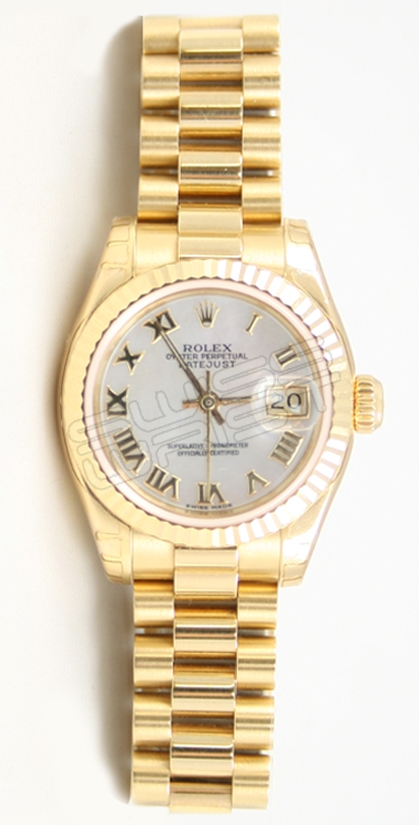
Nate loved his Rolex and learned that every other Rolex-wearer felt the same. I remember a moment when the two of us were sitting on an ice cold bleacher-bench in a local park, watching Little League baseball on a winter-like spring day. The lady on the other side of him was bragging loudly to her friend about her new Rolex watch, a gold version she said had cost thousands. I knew that was true, having had my own gold Rolex several years before.

As I listened to her bragging, I was awash in regret for having carelessly lost my watch. “Lucky her,” I thought. “She’s still got hers.”

Then Nate leaned over and whispered, “That’s not a Rolex.”

“What?” I said, confused by his comment. Her watch looked exactly like mine, and of course she was vouching for it.

“It’s a knock-off,” he said.

“How can you tell?”

“The hands. Her second hand is jumping with each tick. On a real Rolex it sweeps.”

I was impressed he knew that, and suddenly unimpressed with the woman’s bragging. It’s possible her watch was a gift and she didn’t know she’d been given a fake, but whatever the case, all the boasting in the world wasn’t going to turn that counterfeit into the genuine article.

Apparently every designer product made these days has a knock-off version at a radically discounted price. I could buy a $2000 “Prada” bag for only $155 or a pair of “Louboutin” high heels worth $2400 for only $68. Of course just as Nate recognized the fake Rolex, a Prada or Louboutin fan could quickly pick out the imitation.

That got me thinking about people, especially those of us who claim to be Christians. We’ve all known church attenders who parroted the right spiritual lingo, i.e. wore the right label, but who didn’t live out the philosophy behind it. Truth be told, we’ve all done it now and then. But just as a child can sense when an adult doesn’t like him, non-Christians know when someone is a “knock-off believer” trying to fake faith.

Scripture indicates that God doesn’t think much of that, which forces me to examine the validity of my own faith in him. Are there parts of it that aren’t genuine? Am I sometimes a phony Christian, acting one way but thinking another? Two-faced behavior like that amounts to a double standard in God’s opinion and is a serious offense to him. It’s important for me to examine my thoughts and actions carefully and rout out any inconsistencies. I absolutely want to be the genuine article.

Although Nate loved his Rolex, several years after he received it, he put it in a drawer. Believing it was too ostentatious as we struggled to put food on our family table, he felt uncomfortable wearing it and went back to his Walmart watch.

And after that, if any Rolex-wearer noticed his timepiece was low-cost or low-class, that was just fine with him.

“Who is wise and understanding among you? Let him show it by his good life, by deeds done in the humility that comes from wisdom.” (James 3:13)