September 25, 1982

God was good to us on September 25, 1982, the day we met newborn Hans Tomas Nyman. Because he followed his older brother Klaus by only 16 months, we were delighted he was a boy-buddy, even though six year old Linnea was furious with me for having given birth to yet another brother.
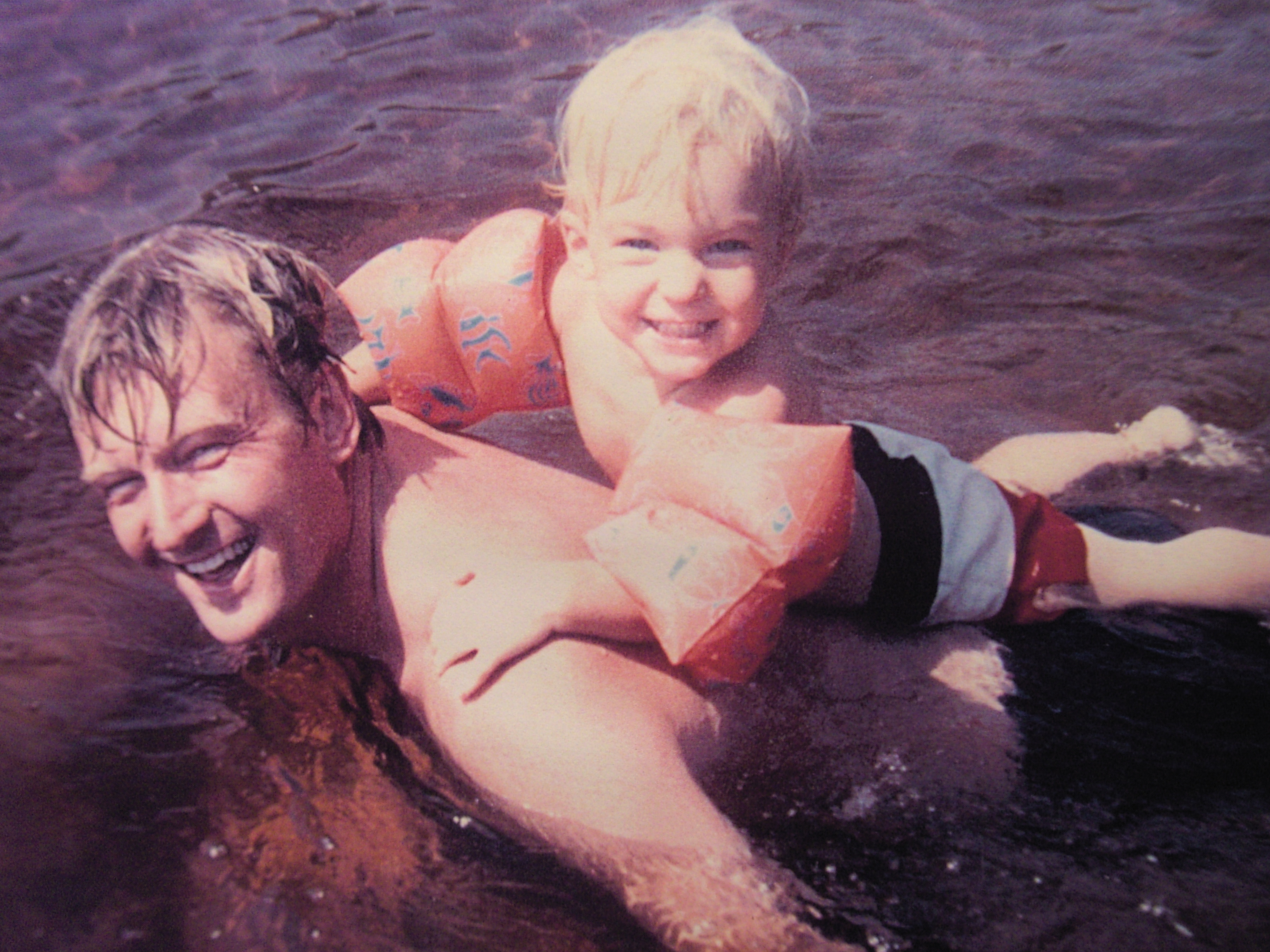
Hans, a little guy who never gave us a lick of trouble, turned out to be a high school kid who was cerebral like his father but also scatterbrained like his mother. Nate used to laugh with gusto every time he told the story of student-Hans pacing back and forth in the kitchen. “It’s due! It’s due!” he said, knitting his brow with anxiety.

“What’s due?” Nate asked.

“I don’t remember what, but it’s due!”

That was Hans. Paychecks from his part time job would come through the wash in his jeans pockets, and he’d often sleep with his clothes on, a half-full glass of water teetering on the mattress next to him. His passion was drumming, and after several years of listening to him beg, we gifted him with a borrowed set of practice pads for Christmas, along with a coupon for lessons. By the time he received his first real drum nearly a year later, he’d proven to be diligent in practice and faithful to the house-rules-for-noise.

When he reached adulthood, Hans could hit almost anything and coax music from it: a marimba, African drums, cymbals, timpani, chimes, bells, a piano and his favorite, the drum kit (a full set of five drums with cymbals). He managed the quads in the school marching band and belonged to several other school bands, along with the church orchestra. He also had his own band.

Although Hans never stopped drumming, somewhere in his early twenties, he began leaning hard into his love for reading, choosing to concentrate on the Bible and C. S. Lewis. His faith in Christ blossomed, and percussion slipped to second place. I vividly recall a week during this time when we were housing 28 “Youth With A Mission” students for a week, as they passed through the Chicago area.

These YWAMers were creating dinner for all of them and us in our kitchen, insisting I not help, so I stood off to the side, observing the over-filled room. Suddenly, through the crowd I spotted Hans, sitting at the island counter with his head bent over a tattered Bible, oblivious to the commotion around him. He was totally tuned in to God.

When he decided to sign on for his own stint with YWAM in New Zealand, the Lord was ready with a spectacular surprise: Katy of England! He was smitten with his first look at her and was thrilled to learn that her love for the Lord came ahead of her love for him, which has built their marriage with triple-cord strength. God has blessed them in abundance: three children in three years of marriage. Although they’re busy and exhausted, the Lord remains #1.

While Hans’ mother still battles scatterbrainedness (for example, phoning him to say “happy birthday” on the wrong date), Hans has left his own scatterbrained history far behind, substituting well-honed skills of organization, planning, hard work and diligence: toward his family, in his drumming and with his ongoing reliance on God.

“The desires of the diligent are fully satisfied.” (Proverbs 13:4)
Saint or Sinner?

A friend recently said, “I’ve been reading the blog and gosh, I never realized what a saint Nate was.”

I’m sure he was also thinking, “He wasn’t really, was he?”

If Nate had truly been a saint, we’d all have known it without having to ask. So why does he come across that way in the blog posts? I suppose it’s because I’ve chosen to share only the good things.

Interestingly, that’s easy now. It’s satisfying. In the months since he died, I’ve missed him more than I ever thought I would and have come to appreciate the good stuff anew.

Psychology experts tell us if we’re going to criticize someone, we should first speak out four praises. Thinking I was already doing that, one day years ago I decided to keep track. Sadly, I was woefully deficient in the praise category.

One thing I learned as I kept my tally was that I could improve at praising, if I practiced. I also discovered something else. When I thought nice things about Nate such as, “He looks good in that shirt,” I often failed to speak them out. If I asked God to prompt me to turn those thoughts into words, he would, but of course I had to remember to ask him.

I did learn one foolproof way to go from my spotty performance to 100% success in dwelling on Nate’s positives: hearing the words “terminal cancer.” Just knowing he would soon die was powerful motivation to change my ways. Now, looking back to the time when Nate was healthy and with me daily, I see it was pride that kept me from succeeding at this when I still could have, and it’s pitiful.

I wonder how marriages would change if wives and husbands agreed to make only uplifting or complimentary statements to one another for a week or even a month in an effort to establish new patterns. This would mean swallowing every word of criticism, all desire to change someone. It would mean continually ignoring the bad and highlighting the good… as I’m finding it so rewarding to do these days.

God knew this wouldn’t come naturally and would be hard for us, but that didn’t stop him from urging us to reach for it. When he addresses those in partnership (husbands and wives, soldiers and leaders, brothers and sisters, church members, parents and children, business partners), he urges us to be positive with our words. As a matter of fact, he elevates this to best-possible-activity level, telling us it actually brings him glory when we do it.

After nearly 11 months without Nate, my inner wish is that I could go back and try again. I know beyond all doubt I could do a much better job now, maybe even be 100%. Maybe even

.… saintly.

“May God, who gives… patience and encouragement, help you live in complete harmony with each other, as is fitting for followers of Christ Jesus. Accept each other just as Christ has accepted you, so that God will be given glory.” (Romans 15:5,7)

Figuring out Fatherhood

Last week two friends tapped on my front door just before leaving town. They wanted to deliver a few things, among them an old copy of a newsletter I’d edited back in the eighties.

Nate and I were members of Moody Church in Chicago then and were raising our children with help from Sunday school teachers, pastors and other families there. I was on the nursery committee, a fun group that birthed lifelong friendships.

One of my duties was to put together a newsletter, the Crib Sheet, 20-plus pages printed quarterly. It was reader-written, and several columns were included in every issue: mothering tips, an interview with a grandma, menu suggestions, quotes from young children, medical commentary, several articles written by young moms, and a word from the nursery chairman.

Believing that fathers played a critical role with their young families, we asked one of them to contribute a short piece for each newsletter. Most were reluctant to write, and occasionally when print time came, I’d still be empty-handed.

This was the case in April of 1984, so I asked Nate, late one night, if he’d write our “Father’s Forum” feature. Last week when my friends came by, the Crib Sheet they put into my hands included Nate’s article. At the time he was 39 and had five children ages 12, 10, 8, 4 & 3.

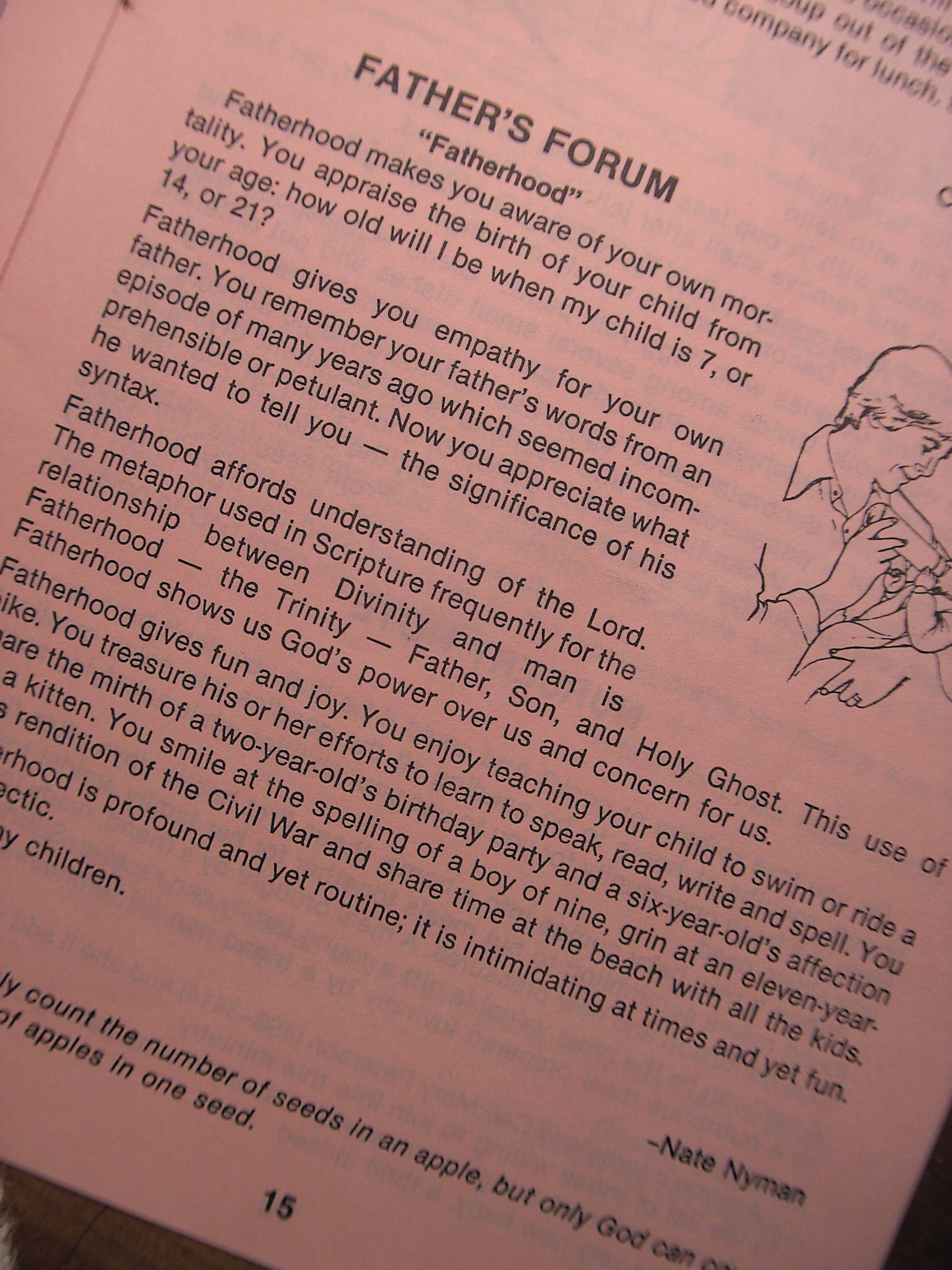
Nate’s piece (below) made good use of 200 words with five summary statements followed by five examples:

Fatherhood


Fatherhood makes you aware of your own mortality. You appraise the birth of your child from your age: how old will I be when my child is 7, 14, 21?


Fatherhood gives you empathy for your own father. You remember your father’s words from an episode of many years ago which seemed incomprehensible or petulant. Now you appreciate what he wanted to tell you – the significance of his syntax.


Fatherhood affords understanding of the Lord. The metaphor used in Scripture frequently for the relationship between Divinity and man is Fatherhood – the Trinity – Father, Son and Holy Ghost. This use of Fatherhood shows us God’s power over us and concern for us.


Fatherhood gives fun and joy. You enjoy teaching your child to swim or ride a bike. You treasure his or her efforts to learn to speak, read, write and spell. You share the mirth of a two year old’s birthday party and a six year old’s affection for a kitten. You smile at the spelling of a boy of nine, grin at an eleven year old’s rendition of the Civil War and share time at the beach with all the kids.


Fatherhood is profound and yet routine; it is intimidating at times and yet fun. It is hectic.


I love my children.                                                              Nate Nyman


What a delight to hear from Nate. When I got to the last line, I started to cry. Even with the mild conflicts detailed in his final point, his firm conclusion was, “I love my children.” And he made sure Crib Sheet readers knew it.

Our friend Dr. John Elsen (with 11 children) says, “Most men are unprepared for fatherhood.” Nate was no exception, but God cares deeply for young fathers and willingly co-parents when asked. He was helping Nate, and he knew it.

Nate’s bottom line, though, is the reason Nate’s children rushed to be with him when the chips were down, because even though young daddies make mistakes, love covers a multitude of sins.

“Love makes up for practically anything.” (1 Peter 4:8b, The Message)