
Don’t lose heart.

Last week I received a note in the mail with handwriting I hadn’t seen for quite a while but recognized immediately. It was the strong script of Pastor George Sweeting, the man who married Nate and I in 1969. He was the head pastor at Moody Church then, and we were delighted he was available to perform our ceremony.
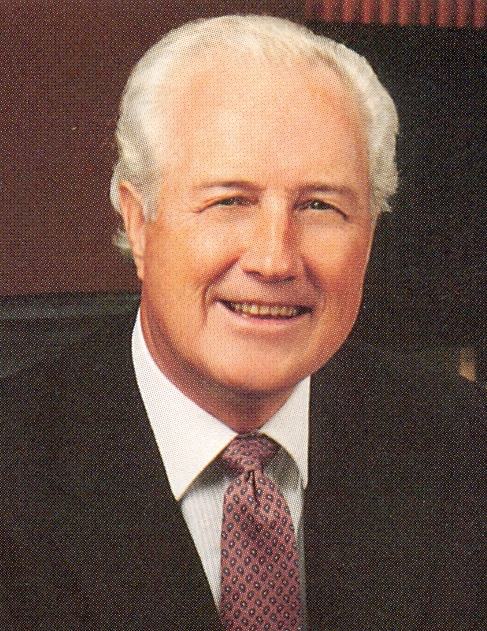
As we met with him privately in the days before the wedding, Pastor Sweeting told us he felt invested in the couples he married and offered to be available to us indefinitely through the years of our marriage, should we need him in any way. Although he eventually left the church to become the president of Moody Bible Institute, he kept in touch with us and occasionally reminded us of his offer.

About a month ago, 41 years after he married us, I bumped into Pastor Sweeting and his wife Hilda at a funeral, and we exchanged hugs and had a quick conversation. His letter followed that meeting and means a great deal to me.

This is a man who has spent a lifetime teaching and preaching the truth of Jesus Christ with indomitable optimism and joy. His letter was filled with encouragement not to “lose heart” in my walk through widowhood, and he cited four Scriptures urging me not to get discouraged or give up, two of them from Nate’s favorite biblical chapter, Hebrews 12. When we grow weary and don’t feel like fighting our battles anymore, whether they’re struggles with sorrow or loneliness or the difficult tasks of the day, the Bible tells us to examine the life of Jesus “so that you will not grow weary and lose heart.”

Jesus didn’t have an easy life in any category, yet according to Scripture he never lost heart, gave up or walked off the job. He remained focused on his mission, difficult as it was, all the way to the excruciating end. God offers to equip us to do the same.

Where Nate lives today, not one soul is discouraged, because the temptation to lose heart has no place in heaven. Rather his life is overflowing with  joy beyond words as he lives with Christ among a crowd of other contented believers. Although Nate sometimes lost heart in his earthly life, all of that is but a dim, powerless memory for him now, if even that. And the same happy destiny awaits all of us who align with Jesus.

Although Pastor Sweeting helped Nate and I “tie the knot” that death has now untied, he’s still making good on his promise to help us by encouraging me not to lose heart.

 “We know that the one who raised the Lord Jesus from the dead will also raise us with Jesus…  Therefore we do not lose heart…” (2 Corinthians 4:14a,16a)

Cleaning Up

I know three women who clean houses for a living. Every time I’m cleaning, I get a mental picture of these three and stand amazed at the energy they have for their work. I struggle to clean a single house well; they clean one after another.

But cleaning in manageable doses can be very satisfying. It isn’t the scrubbing, kneeling, reaching or lifting that gratifies but the end result. After putting a messy room in order, each time I walk through, I get a little kick.

Today I tackled our disheveled cottage. Before my grandbabies came, I went through and babyproofed the house, although once they arrived, we steadily took it to higher levels (literally). Today, however, I reversed the process, bringing everything back down to its former place.

Scrubbing food off the upholstery, raisins off the carpet and toddler hand prints off the windows brought five darling faces to my mind, followed by a flood of gratitude for these precious little ones. But as my sister says, “When the grandkids come, the house takes a heavy hit.” The beauty of it, though, is that with a little soap and water, Windex and Pledge, order is restored.

Today as the wash machine worked its magic on sheets and towels, I thought about the process of internal house cleaning. My childhood Sunday school teacher often referred to the “heart” as a group of rooms, each with a door that could be locked. She urged us to unlock and open each one when Jesus came in, inviting him to inspect every room.

The teacher’s grand-finale question was, “Are there any rooms in your heart you wouldn’t want Jesus to see?” Occasionally I still ponder that. Are all my heart-rooms cleaned up and open to Jesus’ inspection, even in their shadowy corners?

Such a question is, of course, ludicrous. He can look at anything he wants to and is capable of seeing past locked doors and into dark corners. But Jesus himself used the heart’s-door analogy in his own teaching, illustrating difficult principles with this simple, everyday picture. One thing he never did, though, was demand we open up for him. Instead it was always a gentle inquiry. Whether or not we let him in is left up to us.

I long to throw open all the figurative doors of my life in response to Christ’s presence, but often there are issues to deal with first. Just as with my cleaning house today, I might say, “I can’t have company until the house is ready.”

But the beauty of letting Jesus come in even before every nook and cranny is in order is that once he gets access, he’ll enthusiastically help with the rest of our cleaning. We can fling wide every door without hesitation or nervousness, and we can do it now.

Even if we’ve run out of Windex or Pledge, it won’t matter to him.

“Look! I stand at the door and knock. If you hear my voice and open the door, I will come in, and we will share a meal together as friends.” (Revelation 3:20)

Skipping Christmas but not Skipping Tears


Every December my sister and I spend an evening with the Kranks, a family we met in 2001 by reading John Grisham’s book, Skipping Christmas. It’s about a middle-aged couple hoping to duck the expense and demands of a traditional Christmas season by taking a cruise.

When the movie came out in 2004, Mary and I rushed to see it. One of her daughters came along but was so embarrassed by our raucous guffawing she nearly walked out. Ever since then, we’ve revisited the Kranks and their illogical antics each Christmas season, looking forward to laughing together at the same places we always laugh.

This year, due to the combination of illness and family commitments, Mary and I failed to fit in our tradition but never lost the desire. Last night, several weeks late, we finally got our opportunity.

We ordered Chinese food, settled with our tea and beef with broccoli on Mary’s upstairs beds and hit the DVD “play” button. Watching Tim Allen and Jamie Lee Curtis make a mess of things was just as hilarious as we remembered, and we took pleasure in every scene.

But then we came to the cancer part. Because we’d seen it before, I knew it was coming but was surprised by my sad reaction. The storyline has a sixty-something couple living across the street from the Kranks, and toward the end of the movie, the wife discovers her cancer has recurred. Conversation hints this will probably be her last Christmas.

As the camera looked across the snowy street into their picture window, we saw them dining alone on Christmas Eve, and suddenly my eyes brimmed with tears. Although these were actors in a fantasy, my heart believed what it saw and thought, “Your immediate future is going to be awful. Enjoy your ‘normal’ dinner together, because it’s not going to last. Misery is on its way.”

I haven’t cried about Nate’s cancer or about losing him for many days in a row. My kids and I talked often about him during the holiday weeks, which was a deep satisfaction to me. Tears were not part of it, and I felt I was doing well.

Then there was the movie and my tears, a reminder of what widow friends have said. “The triggers are there, just beneath the surface, and you’ll be taken by surprise at the oddest times.”

Tears about cancer during a comedy movie would qualify as odd but also as oddly normal. Although it’s difficult to explain, as the tears came, they were soothing, an oxymoron of mourning. Although I don’t cry every day, I’m still grieving the death of my husband. And until earthly life ends, I always will be.

Thankfully, I had my snowman napkin to dab at my eyes, and as the movie concluded, its ending was optimistic. I’m conscious of God’s careful monitoring of my emotions and know he’ll encourage tears whenever it’s right.

I’ve abandoned myself to his flawless care and his consoling promises.

“Your widows… can depend on me.” (Jeremiah 49:11)