Switching Gears

Going on a trip is exciting. Beginning with the inception of the idea through the loading of the suitcases, even the anticipation is fun. Then airport greetings and animated car conversations are full of promise for a good time together.

But backtracking our steps at the other end of a vacation isn’t nearly as inspiring. Although arriving home can be satisfying, the minute we step in the door, we hear the “have-to’s” of shifting gears. Even before we take off our coats, the pile of mail shouts for our attention. “Pay these bills! Respond to these letters! Look who needs you!” Exclamation points pounce on us from everywhere. Even the calendar hollers with the commitments we wrote on it the week before we left. “Get ready! Your appointments are coming right up!”

The refrigerator calls, too. “The milk is sour! Your strawberries are shriveled! Your sandwich meat is past its expiration date!”

Today as I came home, everywhere I looked I saw another exclamation point. “Unload the dishwasher! Unpack your suitcase! Do the laundry! Get organized for church tomorrow!”

It’s difficult to go from one reality to another, but life offers endless opportunities to practice shifting gears. When we were kids, our Septembers brought a shift in classrooms. College was a shift in our homes and lifestyles, marriage a shift from single to double. Parenthood forced major gear-shifting, followed by empty nest shifts.

For me, widowhood has been the most traumatic shift I’ve been asked to make, a change the equivalent of unpacking after a thousand trips. But I believe God is especially close to us during each of our adjustments, small and large. That’s because he’s never had to gear-shift himself, not for any reason. He’s everywhere, always, in all capacities.

Scripture gives us a word picture to help us understand this, telling us God has no “shadow of turning,” a reference to our human shadows changing as the sun crosses the sky each day. Unlike us, the Lord is constant and sure, thus able to bring stability to the shifts we must make. After he’s helped us through, we can look back and say, “That wasn’t so bad.”
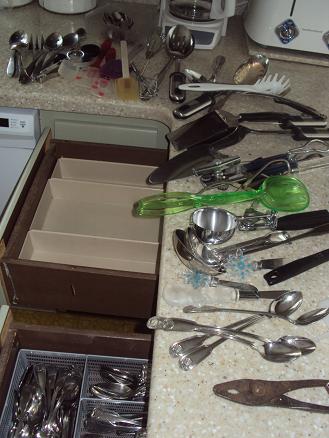
Today, with all the exclamation points of change poking at me for attention, I stood in the kitchen trying to figure out which one to tackle first. For no special reason I opened the utensil drawer where the odd-sized cooking tools were askew and absently began to rearrange things. Pretty soon the drawer contents were on the counter, and I was fingernail-scraping-off sticky old shelf paper.

Before I was finished, I’d hunted in the basement for plastic dividing bins and washed them, wiped out the drawer, put down new shelf paper, washed most of the utensils, set some aside for Good Will and completely revamped my former storage system. All the while my carry-on bag was still on the counter screaming, “Hey! Unpack me!”

But God, as creative as always, simply said, “Before you do anything else, let’s bring order to this chaotic drawer. When you’ve corrected that mess, the rest of your gear-shifting chores will be easy.”

And he was right.

“The Father… does not change like shifting shadows.” (James 1:17)

Team Gran, Florida

My five grandchildren – Skylar, Micah, Nicholas, Evelyn and Thomas – are blessed beyond what they’re yet able to understand. They have parents and grandparents who love them without conditions, and even better than that, who bring their Christian heritage to bear on their lives, praying for them and teaching them of God’s love.

Whenever I visit my three British grandbabies, their other grandma, Sarah, and I have been in charge of our little people for a day, enjoying each other’s company in the process. We’ve been “Team Gran England.”

Today my other co-grandma, Terry, and I had the fun of “Team Gran Florida.”

Although Sarah and Terry are in the same age bracket, I’m nearly 15 years older than both of them. But I have five extremely important things in common with these two women: my precious grandchildren.

Just as a wedding brings the bride’s and groom’s parents together in otherwise unlikely relationships, grandchildren bring co-grandparents together in the same unique way. When these relationships are harmonious, the grandchildren reap great benefits. But they aren’t the only ones.

Today as Terry and I played and worked with Skylar and Micah, we enjoyed each others company as much as we took pleasure in our shared little ones. Between “let’s make a sand castle” and “now it’s lunch time,” we snatched moments of catch-up conversation and exchanged new information about each others lives. Getting to know my co-grandmas better each time we’re together is one of the joyful perks of grandmothering.

There’s a second important benefit in being partnered with a compatible co-grandma. Because both Terry and Sarah have close relationships with Jesus Christ, they’re reminding the children (as I am) that God loves them and is watching over them, that he has good things planned for their lives and wants what’s best for them. They’re highlighting each child’s uniqueness and are crediting the Lord with creating them as one-of-a-kind individuals.

All three of us are giving the same messages, which avoids confusion. Although the children will eventually make their own choices to follow Christ or not, at least while they’re young, they’ll hear us all speaking in one accord.

And there’s a third reason why I’m very grateful for Terry and Sarah. I’m the only one of us who lives far from her grandchildren. Although I could become despondent over the thousands of miles between us, I don’t stress about it for one reason. These two energetic, child-loving women, “Grammy” and “Gandy”, each do enough hands-on grandmothering for two women: themselves and “Grandma Midgee!”

And so it’s not just the children who receive bunches of benefits when co-grandmothers are compatible. The blessing spreads across many miles to encourage the long-distance grandma, too.

Even when I am old and gray, do not forsake me, my God, till I declare your power to the next generation, your mighty acts to all who are to come.” (Psalm 71:18)

Coming Up Short

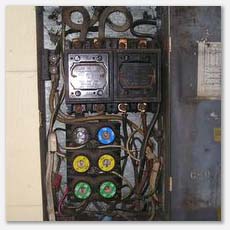
At my house we’re still working with an ancient fuse box and the glass screw-in fuses. Since we had circuit-breakers at our last house, moving to the cottage brought an electrical learning curve. At first I couldn’t tell if a fuse was blown or good, and it was a guessing game trying to link their power with the area of the house they controlled. But gradually our fuse box and I became friends… until last summer.

My electric water heater would work fine for a couple of weeks, then go cold. I’d head to the basement, replace a couple of fuses, and it would work again, until a few weeks later. One day while at the hardware store buying fuses, I presented the dilemma to the clerk. “Are you using the right number?” he said.

“Yes,” I said, “two of them.”

“No, I mean the number on the fuse. They have different strengths. Check your fuse box. Sometimes it says.”

And sure enough, I’d been using 20’s in two holes needing 30’s, shorting on power to the water heater. After I corrected my error, all was well. If only life’s other shortages were as easy to repair: shortages of sleep, money, patience, energy, wisdom, all kinds of things.

Each of us has felt pinched in specific ways from time to time. For example, every new parent knows about sleep shortages and later learns about patience shortages when their children test them.

Nate and I had financial shortages for many years. Families in other countries find themselves short of food or medicine. People in jobs that require creativity find themselves short of ideas, and those needing physical strength in their work become short of energy.

But the worst deficiency is when we feel shorted by God, that he hasn’t come through like he said he would. We claim his promise to provide for our needs and wonder why we’re short on cash. We put him first, believing he’ll direct us, then wonder why we’re unemployed.

I’ve found it helpful not to look at the current-day shortage but rather at a past provision. It’s the manna principle. God told the hungry Israelites to collect only enough for “today”. If they picked up extra (except before the Sabbath), it rotted.

That’s often how we define our shortages. We say, “I made it through today but know I won’t have enough for tomorrow.”

If we apply the manna principle, we’ll focus on the first half of that sentence rather than the last. Manna always came just before it was needed. Anxiety over “tomorrow’s” food was wasted worry.

Today Skylar asked me for some juice. I knew she’d only want half so filled her cup that much. As I handed it to her, she threw herself on the floor and cried, “No! All the way full!”

I filled it to the top, thinking she must be thirsty, and handed it to her. She said, “Thank you,” and skipped off to play. Later I found her cup. She’d drunk only half.

“The eye never has enough of seeing, nor the ear its fill of hearing.” (Ecclesiastes 1:8b)