In the Face of Suffering

Most of today’s news reports included breaking details of the Boston bombings. One interview I heard featured a psychologist named Jeff Greenberg whose specialty is studying people who’ve been forced (by events) to face their own mortality. It might be a terminal disease or something like the 9/11 attacks… or the bombs at Monday’s Boston Marathon.

This morning he said, “When these things happen, it reminds you of the fragility of life, and that death is something that can happen very suddenly and unexpectedly.”

Boston Marathon bomb

He detailed specific, predictable thought patterns people have as they try to cope with what just happened. One of the first things everybody thinks is, “How vulnerable am I?” This goes for those in the Boston area as well as the rest of us who’ve been following them on national news.

Immediately after the question about vulnerability, Mr. Greenberg says we move into firm mental denial: “Most likely I’m safe.”

We might begin blanketing our heightened concerns with a new level of attempted control: locking our doors more carefully, driving with greater care, avoiding crowds, gathering supplies for emergencies. By putting safety measures in place, we’re trying to make sure nothing unexpected gets to us. We think, “Because I’m proactive, I’ll always be safe.”

In the light of day and with intelligent thought, however, we know this isn’t true. None of us are immune to adversity.

This morning I also heard the story of two brothers and their friend, a trio of pals waiting together near the marathon finish line. After the explosions, the brothers had each lost one leg, and their friend had lost both. Their anguish must have been crushing, and the agonies ahead for all three of them can’t even be estimated.

Yet as the newscaster reported, once these young men were in the hospital, they were far more concerned about the welfare of each other than themselves. During the weeks and months to come, they’ll be cheering each other on while trying to share the burdens of their buddies, rejoicing together at every recovery milestone. Their futures will be different from their pasts, but the prognosis for all three is bright, partly because they have each other.

God wants to partner that same way with every person injured during the bombings. He offers himself as encourager, sustainer, leader, and friend. His desire is to “stick closer than a brother.” (Proverbs 18:24) Not one of those injured on Monday needs to suffer through recovery alone after an offer like that.
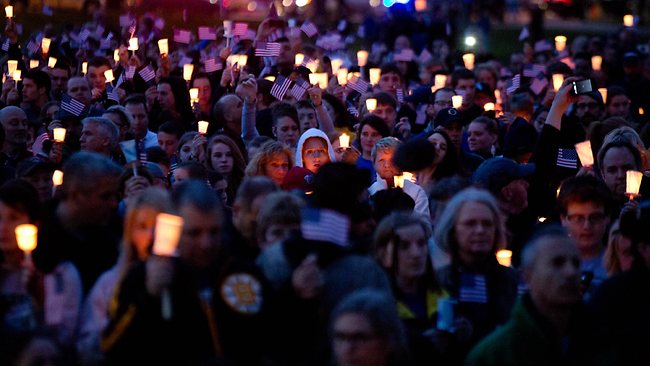
Honoring the victimsJeff Greenberg described how people become newly sensitive to their belief systems whenever they “look death in the face.” Monday’s bombings are another reminder, he says, that death is coming, and there’s no way around it.

Because of that, isn’t this the perfect time to say yes to God?

“After you have suffered a little while, the God of all grace, who has called you to his eternal glory in Christ, will himself restore, confirm, strengthen, and establish you.” (1 Peter 5:10)


Gettin’ Old

Recently I bumped into some friends Nate and I had known in our early days of marriage. They were older than us by about a decade, and we always admired them greatly.

Handshake

I could tell the husband didn’t recognize me, so I said, “It’s Margaret Nyman,” as I shook his hand and smiled.

But nothing.

“From Moody Church?” I added. But he needed more.

“You sent an encouraging letter to me after Nate died.”

And finally it clicked.

“Oh yes! Margaret!” he said, folding me into a hug.

But what he said next was a bit unsettling, though spoken without the slightest tinge of malice. Studying my face he said, “Oh my! It has been a long time since I’ve seen you!”

Not sure how to respond, I just chuckled and turned to greet his wife.

Sometimes the truth arrives as a smack, and I thought about this man’s comment for quite a while. But he was only saying out loud what I’d seen in my mirror every day.

*            *            *            *            *            *            *            *            *            *

Doris D.My sister Mary and I have always been fans of Doris Day, an actress who played the wholesome girl-next-door in movies of the ‘50’s and 60’s. We loved her sugar-sweet romantic comedies and were captivated recently when a special-edition magazine about her life hit newsstands.

When we paged to current-day pictures of this once-adorable woman, however, we gasped, responding much like my friend did to me: “Oh my! What happened to her?”

Mary recovered first, and in a quiet voice said, “It comes to all of us.” And that’s the truth of our steadily declining physical selves.

Doris1.jpg

A popular belief these days is that the Baby Boomer generation, approximately 76-million strong, won’t age. Although this group “got wild” in their teens and twenties, eventually they brought national attention to health food and were responsible for starting the running craze.

They shun retirement and retirement homes, and news commentators have noted Boomers are in a state of denial about their own aging and death, preferring instead to “think about it later.” But deep down, they know it’ll come.

It’s not that each of us didn’t have a grand beginning. What could be more remarkable than God “knitting us together in our mothers’ wombs”? (Psalm 139) If we stockpile enough years, though, Mary’s statement becomes everybody’s bottom line: “It comes to all of us.”

But there is an up-side. Spurgeon says it well: “Our bodies humble us, and that is about the best thing they do for us.” Since God values humility, maybe that’s the whole reason he designed the aging process as he did.

So, no matter how many old friends don’t recognize us through our wrinkles, we mustn’t despair. For now, it’s a healthy humbling, and some day? It’s all going to come to a delightful conclusion:

“The Lord Jesus Christ, who, by the power that enables him to bring everything under his control, will [when he returns] transform our lowly bodies so that they will be like his glorious body.” (Philippians 3:20-21)

Anytime, Anywhere, and Always

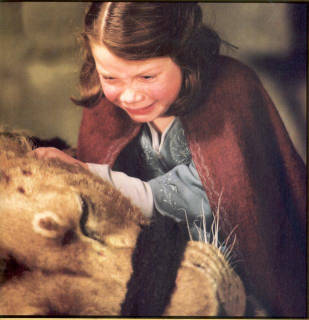
AslanMost of us have read The Chronicles of Narnia series written by C.S.Lewis. Although the major players in these fantasies are 4 sibling children, the real star is a male lion named Aslan.

My favorite line from the books is a 5-word statement that recurs throughout the series: “Aslan is on the move.”

In the storyline, once the big lion has begun to move, all kinds of impressive things begin happening, positive things that defy logic and bring delightful consequences. The lion has supernatural power over everything from relationships to the weather, and the children learn to put their fear of him aside and trust him.

Aslan dies.

When they discover that Aslan’s enemies have bound him and tortured him, they hide in the bushes, frightened and in deep distress over his suffering. As he is killed, their grief escalates, but the next day they realize their beloved Aslan has come back to life! Their joy knows no bounds.

In the Lewis allegory, Aslan parallels the character of Christ, who sacrificed his own life for another motivated purely by love. Once resurrected, the lion is again “on the move,” and eventually his good conquers all evil.

When I hear that statement, “Aslan is on the move,” I think of the way God answers prayer. Let’s say that back in 1986 I begin to pray for someone I dearly love, to commit her life to Christ.

Many years pass as I pray, and my friend evidences no changes in her beliefs or behaviors. She has zero interest in spiritual things. Eventually, as lack of an answer discourages me, my prayers for her wane, and by 2002, I table that particular request altogether. “I guess it’s not meant to be,” I think.

Then, in 2006, taking me by surprise, my friend begins asking questions about the Bible, suddenly interested in what Scripture has to say. I think, “Aslan is on the move!” I might even speak that sentence out loud thinking, “God has finally decided to answer my prayers of 20 years ago!”

In reality, he began to move way back in 1986 with the first voicing of my very first prayer about my friend. Though I didn’t see any outward evidence of change, he began creatively shaping circumstances, rearranging the details of that woman’s life, and bringing along situations that would challenge her toward faith.

In the Narnia story, Aslan’s arch-enemy is a witch who tries to work her magic on him, but his response is profound: “There is a magic deeper still the Witch does not know.”

Trust

Of course Christ’s power has nothing to do with magic and everything to do with him being God Almighty, but the principle is the same: with his unmatched supremacy he can overcome evil with good anywhere, anytime, and always.

And incredibly, he often begins the process by responding to our prayers.

“I am the Alpha and Omega,’ says the Lord God, ‘who is, and who was, and who is to come, the Almighty.” (Revelation 1:8)