
Just Heavenly

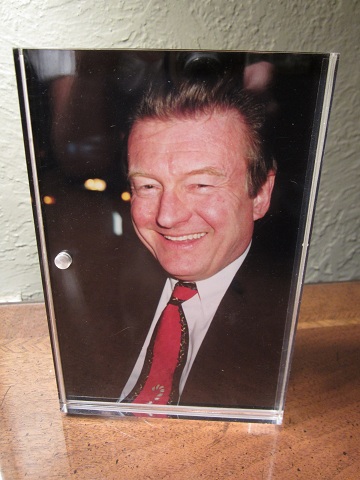
Since November of 2009 when death took Nate out of my daily life, I’ve missed him continually. His picture sits on my desk, and when I look at his smiling face, it’s natural to smile back. Of course we can’t communicate anymore, but I’m just practicing for the future when once again we will.

Heaven is real to me. I believe everything God says, and he says heaven is a specific place. I know Nate has gone there and one day I will, too. When I smile at Nate’s picture, part of my pleasure is in visualizing the togetherness heaven promises. But Nate isn’t the only one in my mental picture. Jesus is, too, supremely so.
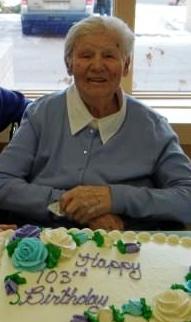
I remember watching a video of Erwin Lutzer’s mother on her 103rd birthday. Her husband had passed away several years before, and she longed to go to her heavenly home, too. Someone asked if she was looking forward to being reunited with him. She smiled in acknowledgment but said, “I want to see Jesus.”

During the last 2½ years, I’ve received 9 books about heaven. One was inspired by the experiences of a 4 year old who seems to have briefly visited heaven during a surgery. Because I agreed with the title, “HEAVEN IS FOR REAL,” I was eager to read it. While trying to be mindful that the report was given by a young child, I enjoyed possibility-thinking as I read. What impressed me most was Colton’s attitude. It seemed easy for him to take in all he experienced, at face value. No skepticism. No yes-buts. Just of-courses, and why-nots!
The Bible tells us flat-out that we can learn from children, and Colton taught me, not so much about heaven as about accepting what God says about it without superimposing my own opinion over it. Children are pros at literal thinking so that what they hear is what they believe. Even Jesus pointed this out in his teachings. So maybe we ought to think about heaven like children do.

And what do they think? First and foremost, Jesus is there.

One of my own children, as young as Colton was, made a statement about heaven I’ve never forgotten. Little Louisa came to me, looking concerned. “You’re not going to heaven very soon, are you Mom?”
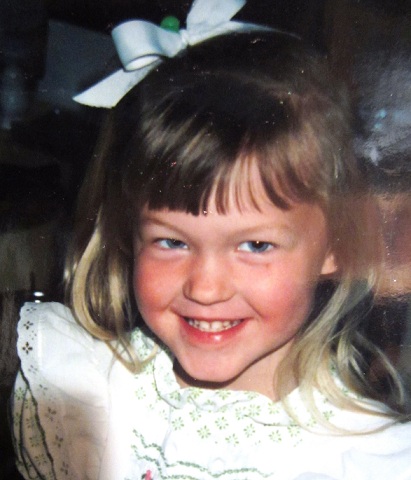
“No, probably not till I’m really old,” I said.

“Well, when I get to heaven, where should I look for you?” she said.

While thinking about what I should say, she came up with her own answer. “Just be standing next to Jesus. I know I’ll be able to find him real easy, and then I’ll find you, too!”

Colton, Louisa, and Mrs. Lutzer are 3 fine examples of how we’re to think about heaven: it’s a real place, we’ll go there someday, and Jesus will be waiting to greet those of us who believe in him.

Jesus said, “I am coming again to welcome you into my own home, so that you may be where I am.” (John 14:3)
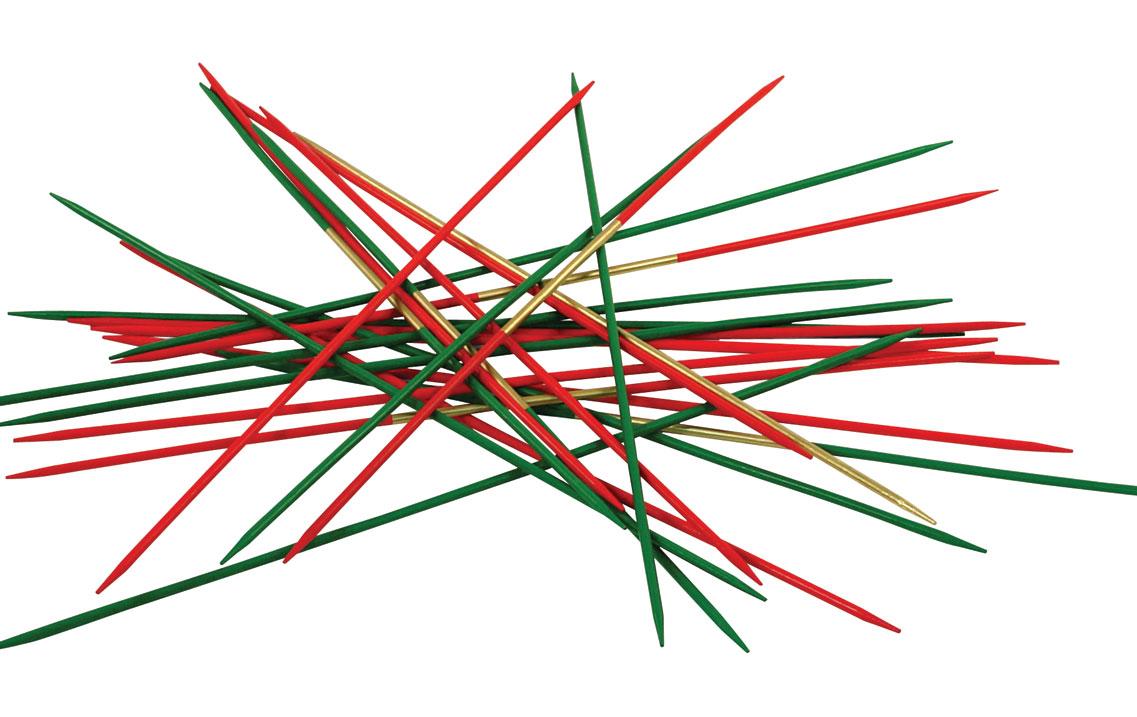
Pick-up sticks

Some people think God gets pleasure out of manipulating us, as if we were the sticks in a pick-up game: flick one here, put pressure on another there, and roll someone else away. But that’s a skewed analysis. Of course he could use his power that way if he wanted to, but the Almighty only maneuvers people around if the end result will be their betterment.

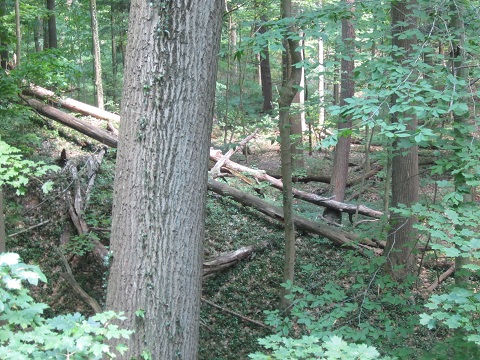
As I walk the dog on our route to the beach, one long stretch of road is bordered by forest on both sides, with beautiful views every-which-way. The pavement was laid half way up a giant dune, which leaves a descending valley on one side and an ascending hill on the other.

If a tree goes down in a wind storm, residents prefer to let it be, allowing the natural process of forestation to take over. So after a wild winter, the valley might resemble a game of pick-up sticks being played by a couple of massive storybook giants.

Sixty-foot long trunks lie in a jumble, giving the impression they were tossed there by the hand of God. We look at the disorder and think, “If we could get a crane down there to line up the trunks, and a saw to chop them into 24” lengths, we could stack them in cords and neaten up the valley.”

We’re tempted to think this way about the fall-out from storms in our lives, too. When bad news comes (as it eventually does to us all), life feels as chaotic as the forest floor looks. We think, “God is manipulating me and my life, and now I’m in a mess with huge problems. If only he would straighten it all out… and do it now!”

But maybe we can take a lesson from the forest. After trees have been thrown down by severe winds, their trunks settle on top of each other in pick-up-stick disarray, with no power to change their positions. But as they’re left alone, forest plants begin to slowly grow over them, attractive ground covers like ivy, myrtle, and pachysandra.

The mix of plants, bark, wood, and dirt gradually morphs into rich topsoil to nourish the plants, and when next year’s spring arrives, fallen tree trunks will be dotted with wildflowers. Although the start-to-finish process takes time and begins with the chaos of trees crashing down, the end result is peaceful beauty.

In the same way, if we trust God to work with us through our illnesses, accidents, break-ups, and other problems, when we come to the end of them, he’ll reveal some special gifts we couldn’t have come into any other way.

At the conclusion of a game of pick-up sticks, all we have is one winner. But at the end of our trials, if we stick with the Lord, he is sure to do something spectacular for not just one of us but for every one of us.

“God blesses those who patiently endure testing and temptation. Afterward they will receive…” (James 1:12)

Exercise caution.

Today while running errands I found myself driving behind an erratic driver in a compact car. She was crawling at what seemed like walking speed on a country road with a speed limit of 55.

It was easy to be patient, however, because on the roof of her car was a big yellow sign that said, “STUDENT DRIVER.” As a matter of fact, I was happy to put some distance between us, giving her space to make mistakes without pulling me into the mix. While waiting several car lengths back for her left turn, I breathed a quick prayer of gratitude that I was finished sitting shotgun for 7 driving wanna-be’s in my own family.

Handing the keys to an inexperienced 15-year-old when the minivan he was practicing on was mine, always went against me. One maiden voyage home from the DMV with a new learner’s permit at the controls saw us taking turns on 2 wheels. Thank goodness that’s over.

The saintly patience of driving teachers has always been impressive. A career of climbing in next to one green driver after another, day after day, year after year, has to be the ultimate test of endurance. It must be a difficult life to have to continually be braced for impact.

Of course these dedicated instructors do have one advantage over the rest of us: dual controls. Though they sit on the right like any other passenger, the second set of gas and brake pedals are tools they can use to avert an accident and prevent damage to vehicles, drivers, and themselves.

The idea behind a driving education course is to let a novice accumulate on-the-road experience in a semi-safe vehicle. The job of the trainer, then, is to let them retain control until the last second before disaster strikes, refraining from using the emergency pedals until the student has no time left for a correction.

I like to think of God watching over us in a similar way. There’s just one big difference: he doesn’t always use that second set of pedals when he could. Though he’s able to prevent our every mistake and accident, he usually doesn’t. That’s because we learn best from our blunders.

What if an exasperated student driver asks her instructor to get out of the car? If he does, she leaves herself without a safety net. Both she and the car are at risk, because the experienced feet that had been hovering over the second set of pedals have disappeared. With the Lord, it’s something similar. If we ask him to stay out of our lives, he probably will. He’ll continue to be concerned for us, to love us, and to hope we’ll re-invite him in.

The question is, how much accidental damage will that take?

“It’s best to stay in touch with both sides of an issue. A person who fears God deals responsibly with all of reality, not just a piece of it.” (Ecclesiastes 7:18, The Message)