
Who’s your hero?

Although it’s St. Patrick’s Day today, I’m still thinking about Valentines Day. I’ve just thought of a great gift every husband would love: a list entitled “TEN REASONS WHY YOU’RE MY HERO.”


Since Nate is gone, it’s too late for me, but I know he would have loved receiving such a list. Many men are under-confident in their abilities as husbands, and written reassurance would probably feel good.

The list could be ten character qualities you’ve seen in him or ten experiences during which you’ve watched him perform well. Wives and husbands often share secrets no one else knows about, and a hero-list might be ten of those. Or it could simply be ten reasons why you love your man.

Once in a while I see a Facebook comment between a husband and wife that’s upbeat and complimentary. Because it gives me a little burst of joy, I imagine the recipient feels joy-times-ten. Sadly, though, it’s more common and much easier for us to take our spouses for granted and assume we’ll always have them. The fact that more marriages break apart than stay together is a testimony to the lie of that assumption.

But there are ways other than divorce that marriages can fail. Loneliness is a cancer difficult to cure. When schedules get crowded, we expect spouses to understand and sacrifice couple-time for the greater good of the whole. The needs of children, too, can override time together and squeeze the love out of a relationship.

My mom often said, “You began as a couple and will end there too, so make sure you put him first all along the way.”
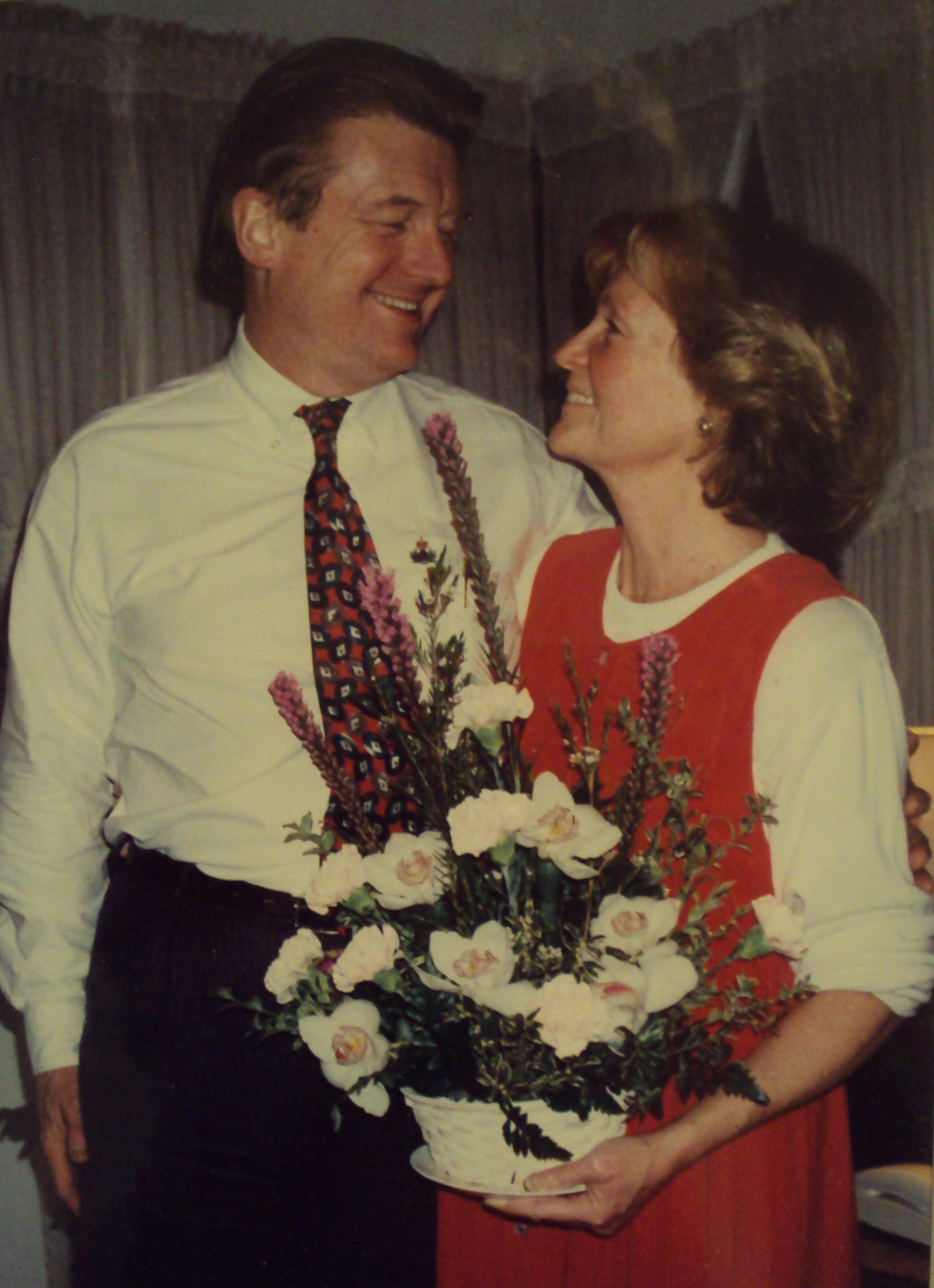
This is a mouthful when it comes to everyday life, and I wish I’d done it better. Nate did well enough for both of us, which probably caused me not to be as attentive as I should have been. But I missed many a chance to enrich his life by not communicating that he had hero status to me. Three sentences he often said were, “I love you; thank you; and I’m sorry.”

In a wife’s mind, these valuable words are the glue that holds a relationship together. When a person says these things, he/she isn’t taking a partner for granted but is nourishing the relationship and moving it forward.

Marriage was God’s idea, and once we tie the knot, he’s involved. Whether we sink or swim is important to him, and he offers to help us when the relationship gets frayed at the edges. I believe he’ll also quiz us about our behavior when we eventually stand in front of him. It’ll be part of “giving an account” of how we lived.

My chance to better my marriage is over, but those who are still married can lavish happiness on their #1 earthly relationship while simultaneously gaining God’s approval. So, putting your husband on a hero-pedestal becomes win-win for both of you and makes every day Valentines Day.

“Each of us will give an account of ourselves to God. Therefore let us stop passing judgment on one another.” (Romans 14:12-13)

Cradling Grief

Ever since Nate died in November of 2009, I’ve heard from blog readers who’ve also gone through the agony of losing their husbands. But the comments and emails haven’t been just about widowhood. I’ve heard from widowers and those who’ve experienced suffering in many categories other than through death.

In cyber-conversations people have described a variety of severe stresses that have caused depression, anguish, fear, isolation and physical decline, to name a few. The one universal is that a reason to suffer eventually comes to us all.

As my cyber-friends have shared their stories, it’s sometimes difficult to respond in helpful ways. None of us can know exactly what will reassure and soothe someone who is suffering. But I now know how it feels to be on the receiving end of sympathy from people who are trying to help.

When any of us purchase sympathy cards and think carefully about what to write inside, our intention is always to bring comfort to the recipient. None of us would want to cause a sad person to be sadder. And yet sometimes our words do that.

I remember in the days after Nate’s funeral that many cards contained wounding words: “God will bring good from this,” or “God wasn’t surprised by Nate’s cancer and is sovereign,” or “Now is the time to eat well and get plenty of rest.”

These things were all true, but none made sense at the time. Other cards said, “How about I come and visit you?” or “We should go out to eat,” or “Why don’t we plan a get-away?” Many cards included verses of Scripture.

I ignored them all.

The most meaningful words that came in the early weeks of widowhood were, “I have no words.” Her statement was proof she’d joined me in my suffering, and it was a comfort.

As time ticked by, the numbness slowly subsided, and written Scripture was what I craved. I began hoping it would be inside every card. When it was, I studied the passage carefully, sensing that God himself had chosen it just for me. Many had a powerful impact.

One lesson I’ve learned is that sympathy ought never to include a way to “fix” the problem. Grief is a process, not a puzzle to be solved or a hurdle to be jumped as quickly as possible. Although it sounds odd to say this, grief ought to be carefully cradled. A wounded heart can be broken if others move in too quickly with “you ought to…”

None of us fully understand the phenomenon of suffering, but one thing is sure.  God makes himself available to a sufferer in ways a non-sufferer doesn’t experience. He knows exactly when to be silent, when to communicate, and when to simply sit with us and record our tears.

He’s been perfect sufficiency to every stage of my suffering and will be the same to anyone who cries out to him.

”How abundant are the good things that you have stored up for… those who take refuge in you, [Lord]. In the shelter of your presence you hide them.” (Psalm 31:19-20)


Becoming an Expert

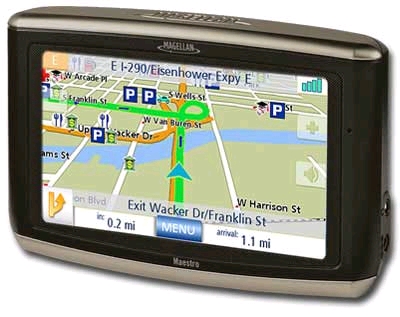
Last week while in Illinois, I tried to find “my” expressway back to Michigan by using a short-cut. Sadly, my instincts were off, and I got lost, wasting a precious half-hour late at night. For this reason and others, my kids have urged me to buy a GPS. I don’t even know what the letters stand for.

But this week, with their recommendations in hand, I drove to Walmart to see if they had a GPS simple enough for simple-minded me. When I got it home, I couldn’t even figure out how to attach it to the car.

Thankfully, Klaus came to the rescue, giving me a short course in how to make it work. I can see, though, there will be a steep learning curve in using it, just like there’s been for every electronic gadget I’ve owned. That is, if a GPS is an electronic gadget. I don’t know that, either.

I often think of how little we know as we pace through life. For example, I understood only 1% of what Nate did every day of the week as a lawyer. And when the electrician put in our new furnace, it was a another mystery. When a nurse takes my blood pressure, I can’t figure out what she’s listening for with her stethoscope. On and on the ignorance goes. It’s a wonder I can tie my shoes. Come to think of it, I wear slip-on clogs.

Who among us can really claim to be an expert at something? As God looks down from heaven, he must get a kick out of someone claiming to be an authority on some subject. Compared to him, even a lifelong expert knows very little. But the more important question is, what is it we’re trying to get good at? Are we working to master the things that matter?

Scripture tells us if we want to be experts, we should start by pursuing a trio of subjects God refers to frequently: wisdom, knowledge and understanding. Wisdom is determining what’s right and then doing it. Knowledge is learning facts, investigating information. Understanding is putting the other two together with discernment.

Questing after these intangibles is a challenge, but there is a way to work on all three at once: just study Jesus. The Bible tells us he’s #1 at wisdom, knowledge and understanding. We may work hard to become experts at repairing cars, knitting sweaters, speaking foreign languages or running marathons. But the expertise that matters most is gained when we draw close to Jesus.

And as we get more and more wisdom, knowledge and understanding from him, he’ll direct us to all kinds of other information, maybe even the meaning of the letters GPS.

Wait a minute! I just remembered! It stands for Global Positioning System. Was it the Lord who brought that to my mind?


“The Spirit of the Lord will rest on him [Jesus]— the Spirit of wisdom and of understanding… the Spirit of the knowledge and fear of the Lord.” (Isaiah 11:2)