Signs of the Times

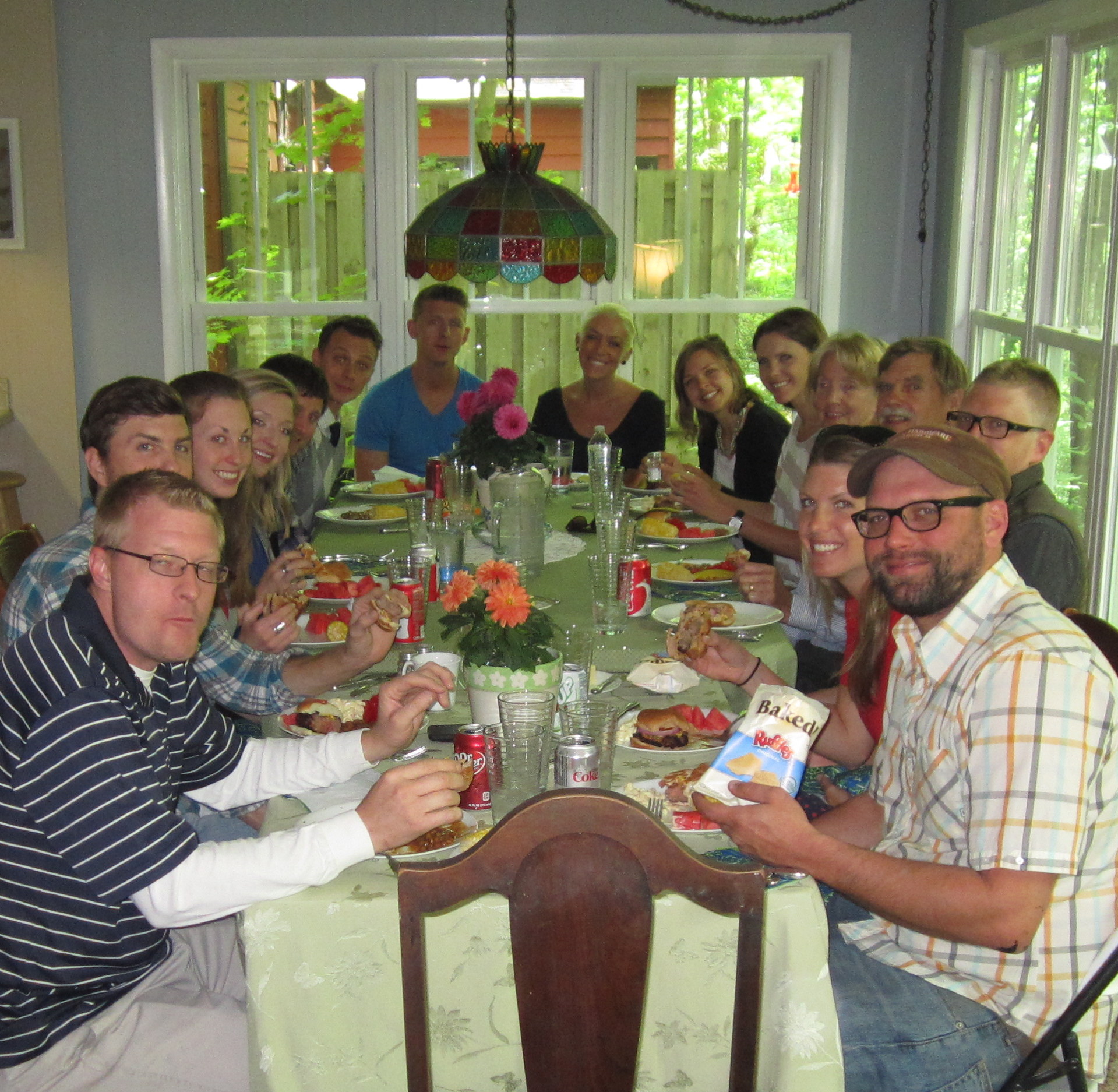
Let's celebrate !Today was a day of celebration centered around our middle child, Klaus. Last week he graduated with a degree in Human Resource Management from Purdue University at the same time as he turned 32, and he’s close to launching an interactive web site he’s been developing for 3 years, www.fishaband.com. On top of that, he and Brooke are 3 weeks from their wedding and a honeymoon in Hawaii, making these particular months an extraordinary time for them both.

Every life includes significant mile-markers, and looking backward we can see them clearly. Some are celebratory events like today’s party, but others would never be labeled “celebrations”. We don’t think of the negatives as being mile-markers, but they’re probably more significant than the party-worthy ones. For example, a critical comment might be a marker that ends up changing a bad behavior pattern. Or an unexpected job loss might lead to a much better career.

An important marker might be a parent’s dementia when they no longer recognize their own child, or the death of someone dearly loved. These milestones aren’t good ones but are profoundly important just the same. And good things can come from all of them. Klaus is a case in point.

Nate and I had to take him out of college (for financial reasons) when he was only half-finished at age 20, a big disappointment to him at the time. Today, degree in hand, he looks back at that signpost and says, “It’s better this way. Back then I had no idea what I wanted from life.” Good has come from what was a “bad” marker 12 years ago.

A GOOD day...

Another Klaus-example was the signpost that occurred when he chose to leave the bustling Chicago metro area to live in a tiny Michigan town. After living his whole life “in the big city,” his move to a small town seemed difficult, but down the road he ended up meeting his true love.

Scripture tells us if we turn our lives over to God’s direction, every mile-marker after that will have positive results….. eventually. As always, patience is required, but if we’ve given our lives to God for his purposes (which are always good), without fail those purposes will stand. (Proverbs 19:21)

Klaus has committed his life to Jesus Christ, and the markers we celebrated today are part of what has resulted. He recognizes that this year’s many important signposts are exactly what God had in mind for him. Though there may be disappointments or even catastrophes in his future, they won’t come without God having sanctioned them first, and since that’s true, Klaus can proceed with confidence and optimism.
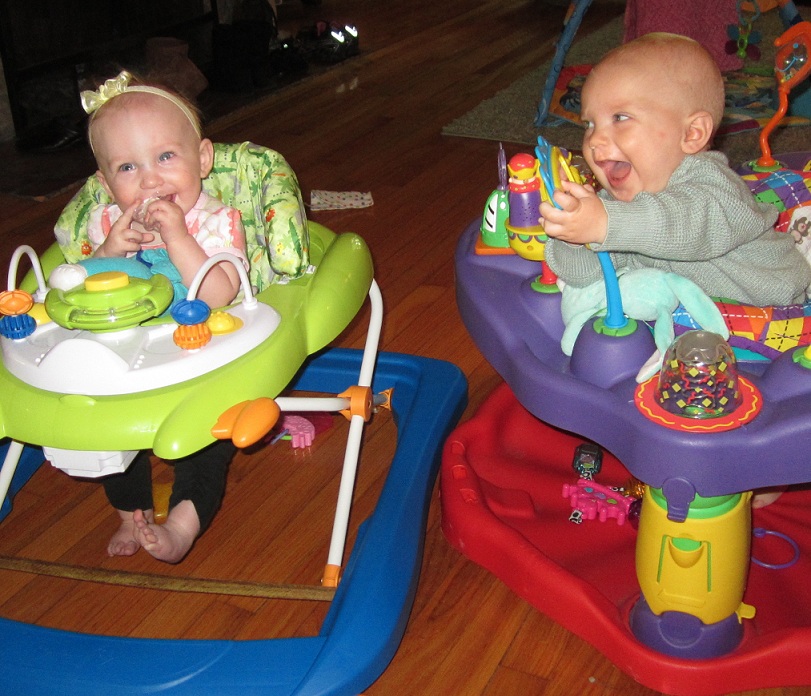
Cousins Emerald and Jones, 1 week apart

One of his gifts today was a box entitled, “Your Life in T-shirts.” Each one represented a life-marker, beginning with a tiny baby shirt embossed with his name. He’ll wear many other shirts in coming years such as “fishaband.com” or “Welcome to Fatherhood!” or “Little League Coach.” Today we celebrated the signposts thus far…. while God was busy putting the next markers into place.

“Your ears shall hear a word behind you, saying, ‘This is the way, walk in it,’ when you turn to the right or when you turn to the left.” (Isaiah 30:21)
Keeping an Eye

All of us treasure our eyesight. In reading through scriptural references to the eyes, we’re told we can gain much by what we allow ourselves to look at and can get into trouble the same way.

One biblical reference to an eye, though, has always puzzled me: “Keep me as the apple of your eye.” (Psalm 17:8) I know being the apple of someone’s eye means you’re very special to them, possibly more important than anyone else. It’s a position of loving favor. But what’s the logic of an apple being put together with an eye?

In the psalm above, David is talking to God, confident he is the apple of his eye. And he’s right, since God has already told him so. In Zechariah 2:8 God warns that anyone who hurts his people hurts the “apple of his eye” and will have to pay serious consequences.

Since the Bible contains the oldest references to the apple-eye phrase, I decided to research its meaning: (1) the ancients thought the eye’s pupil was a sphere much like a round fruit, calling it the apple of the eye; (2) the original Hebrew for this idiom was translated “little man of the eye.” The Latin word pupilla, which is much like the word pupil, means “little doll.”

Apple of his eye

So here’s the connection. When we stand face-to-face with someone, looking at each other closely eye-to-eye, we each see our own reflection in the pupils of the other. And so the phrase “apple of my eye” refers to a very close, one-on-one relationship with someone.

Only one person at a time can be close enough to see their image in another’s pupil. It doesn’t work with two. Thus there’s only one person who can be the apple of another’s eye. So how did this work with David and God? Or for that matter, with God and us?

Because the Almighty is who he is, superior to us in countless ways, he can (miraculously) be eye-to-eye with all of us at the same time while still remaining one-on-One. He’s a personal God, able to be all things to all people simultaneously. I can be the apple of his eye at the same time you are. It’s one of those divine phenomenons of 100% here and also 100% there.

God the Father has told us no one can look directly at him and live. But he’s given us the apple-eye expression as a way to understand how important each of us is to him, hoping we’ll feel the same in return.

In a related Scripture, God tells us he’s willing to guide us with his eye (Psalm 32:8). As we’re gazing at him, he passes along his all-wise guidance, which is then easy to receive when we’re that closely focused on him.

So no matter what happens to my earthly eyesight, I don’t want anything to damage my apple-eye vision.

“[God] shielded him and cared for him; he guarded him as the apple of his eye.” (Deuteronomy 32:10)

Without Wavering

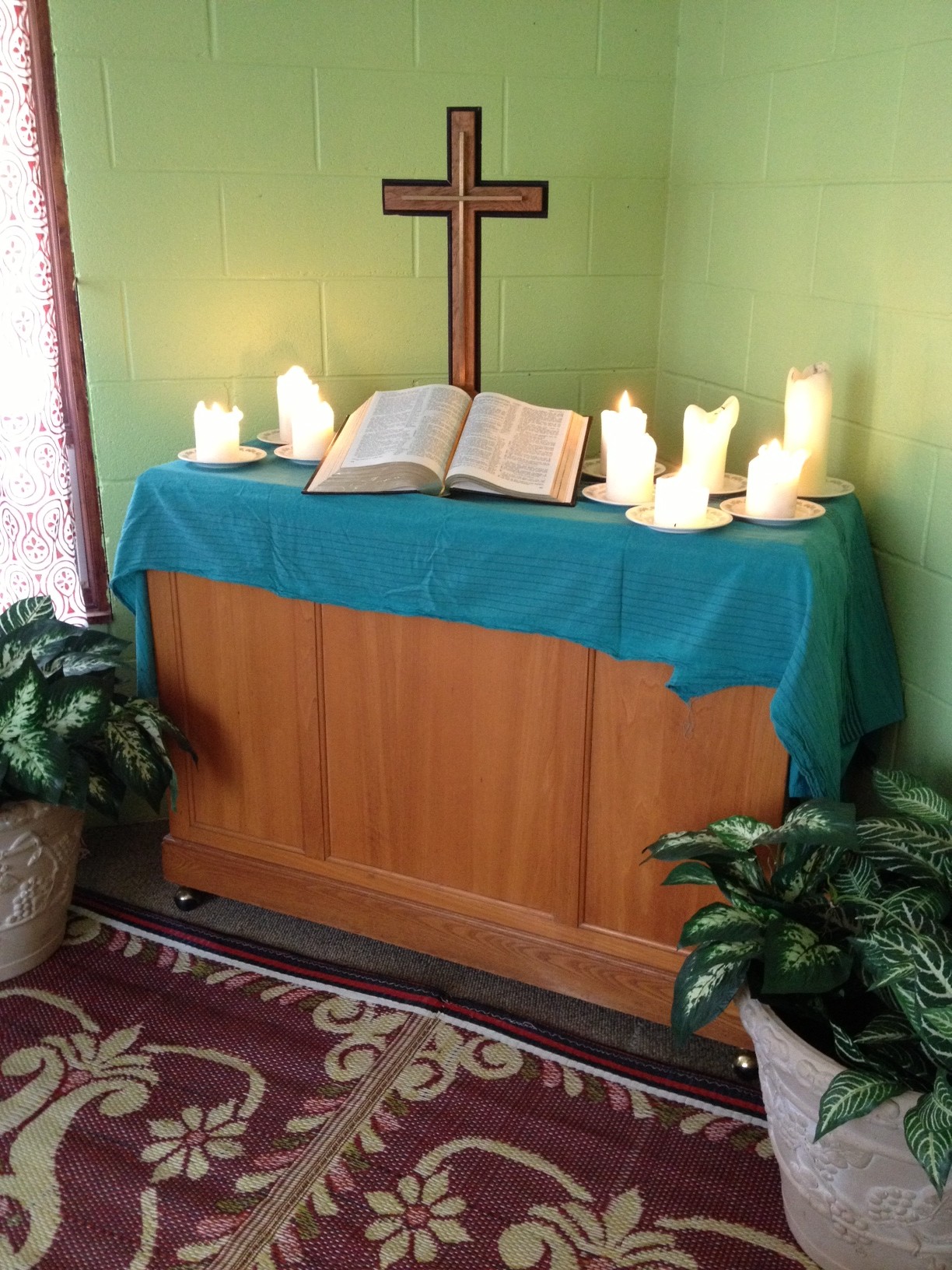
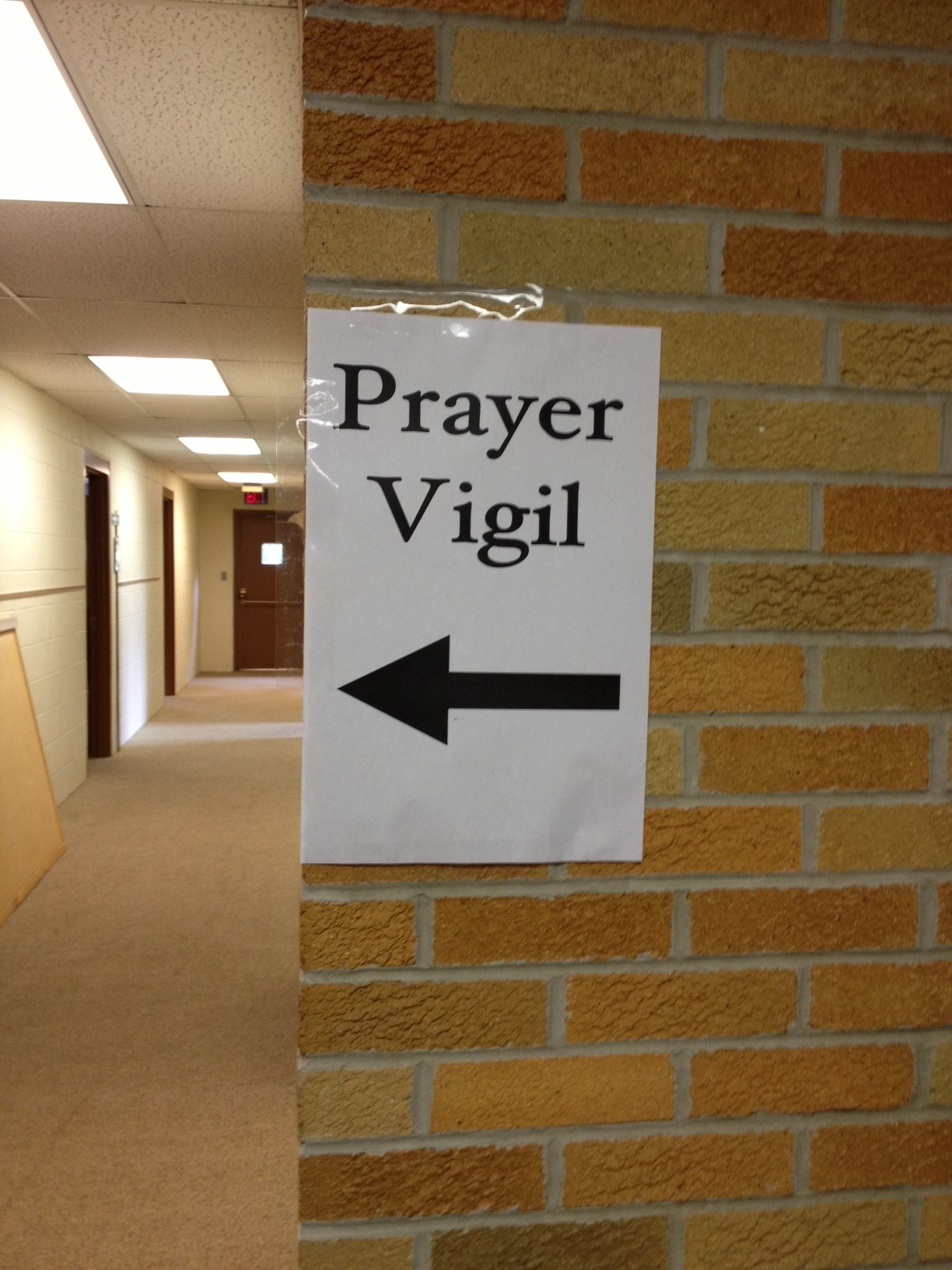
photo(6)Today I participated in our church’s biannual prayer vigil. By definition, a vigil is “a period of watchful attention.” It’s sometimes coupled with fasting or staying awake during normal sleep hours to focus on something special by guarding it, observing it, or praying over it. And today we were praying.

Those who wanted to participate signed up for a time slot and promised to pray then, either at the church or from another location. Throughout one day, the church and its current concerns would be continuously brought to God’s throne room.

Our church prayer team created a private atmosphere of tranquility for those who wanted to use it, complete with candles, a comfortable chair, a table, lamp, hymnal, Bible, and curtains drawn. The moments of people’s prayer times were set apart for just the Lord and them, yet we were all joining in one consecutive vigil much like links on a chain reaching from our prayer room to heaven.

photo(5)

Pages of printed verses were made available, and one of the passages I appreciated today was from Romans 4:“Abraham never wavered in believing God’s promise. In fact, his faith grew stronger, and in this he brought glory to God. He was fully convinced that God is able to do whatever he promises.” (20-21)

Abraham had an astounding faith that believed God would follow through with what he said. The promise this passage refers to is that his descendants would grow into a great nation, this when he was already old and had no children. Even more remarkable was that during this time when he believed God would come through but hadn’t seen it yet, right then Abraham’s faith “grew stronger.”

Extraordinary! And the reason? He was “fully convinced” God would keep his word.

Before I began to pray at the vigil, I asked myself a serious question. If I’m just as “fully convinced” as Abraham was, why do I sometimes “waver in believing?”

Once in a while after God does answer prayer in a measureable way, my faith gets a boost, but that’s after-the-fact. Abraham’s faith actually grew while he waited to see God act, literally waiting for decades.

As I thought about this, I saw the next phrase in Romans 4: “In this [continuing to believe against all odds], he brought glory to God.”

imsev204-011

Light bulb moment! Believing that God will do what he promises, whether we see it in our lifetime or not, actually brings glory to God. I was wrong when I thought believing without wavering was about my own will power. Instead it’s about God’s glory. Continuing to believe when there seems to be no hope at all is one sure way I can bring blessing to my Father.

So when I began to pray today, it was easy to blanket the requests with scriptural promises, believing without wavering if for no other reason than to bring glory to him.

Even when there was no reason for hope, Abraham kept hoping.” (Romans 4:18)