1st Place on the 4th

Nate and I raised 4 boys, which taught us a great deal about explosives. As far as they were concerned, any activity that began with fire was something good. Before they entered kindergarten they all knew how to strike a match without burning their fingers, and I remember getting into trouble with a neighbor mom when Klaus taught her 3 year old how to do it, too.

So here we are on the 4th of July. Booms, blasts, and bangs abound as happy celebrations mark Independence Day. Explosions are the American way of commemorating our country’s birthday, especially when the pyrotechnics spell out, “Let freedom ring!”

The spectacular displays in the night sky are reminiscent of these famous words: “The rocket’s red glare, the bombs bursting in air, gave proof through the night that our flag was still there.”

We have a unique history during which wars were fought to secure the freedom of individuals, and those of us blessed to be born/raised here, really appreciate this gift. The fact that so many from other nations want to live in the USA is a testimony to the value of personal freedom.

Google got in the spirit of this day, too, posting a home page with this logo:

Their statement, “This land was made for you and me,” is a line from a song written by Woodie Guthrie in 1940, and the reason he wrote it might surprise you. It was his critical response to the hymn, “God Bless America,” which is a prayer. He was tired of hearing that one and said it was unrealistic and complacent. Originally he titled his replacement song, “God Bless America for Me.”

This morning when I saw Google’s quote, I looked up the song’s history, learning that the real reason Mr. Guthrie didn’t like “God Bless America” was his disinterest in God. If we don’t like someone, we don’t particularly want their blessing.

Why would God ever want to bless America anyway? The only realistic answer is that our founders craved his favor and were willing to establish the country on scriptural principles to win it. I’m fairly sure asking God to bless America “for me” is a step away from that.

But Woody Guthrie needn’t have worried. Our national anthem is neither “God Bless America” nor “This land is your land.” It’s “The Star Spangled Banner,” which isn’t even considered a hymn. But despite usually singing just the first verse, if we read all the words, it turns out to be a hymn after all:

Blest with victory and peace, may the heav’n rescued land
Praise the Power that hath made and preserved us a nation.
Then conquer we must, when our cause it is just,
And this be our motto: “In God is our trust.”

God has indeed blessed our country, and if every citizen chose to honor and bless him back, I don’t doubt he’d continue to bless America.

“What joy for the nation whose God is the Lord, whose people he has chosen as his inheritance.” (Psalm 33:12)


Picture-Perfect

My daughter Linnea is in Michigan with me this week, husband Adam, 3 year old Skylar, 2 year old Micah, and 4 month old Autumn. Having children around enlivens the rest of us. Their enthusiasm for life is contagious, even the way they hit the “go” switch the minute they come to consciousness each morning and keep going till they’re ready to drop.

This afternoon as Skylar and Micah napped, Autumn didn’t, so since I was babysitting, this little girl and I had some one-on-one time. We unloaded the dishwasher together, picked up toys, played peek-a-boo, took a stroller ride, and sat in a rocker. As we cuddled there, she fell asleep in my arms, melting into a limp bundle of pudgy beauty.

I couldn’t help but study her sweet face the whole time she slept, marveling at how perfectly she is put together. Of course no one is perfect, but looking at her today, she sure did seem to be.

Looks can be deceiving, though. In Autumn’s short life she’s already demonstrated enough me-first episodes (especially during the night!) to convince us she isn’t perfect. But then again, we’re not surprised.

“Welcome to an imperfect world, little one.” (She’ll fit right in.)

Although the odds for perfection in this world are against us, life didn’t start out that way. Eden was flawless, and earth’s first citizens, Adam and Eve, probably qualified as perfect. For how long, we don’t know. Maybe an eon. Maybe 10 minutes. It certainly wasn’t God’s fault they threw perfection overboard for a blemished existence. They just didn’t carefully ponder the consequences.

Before we come down too hard on them, though, we have to admit we do the same thing. God sets out guidelines for us that have perfection written into them, just as he did for Adam and Eve. We then tweak them to our liking and step in a compromised direction without seriously considering the consequences. When we find ourselves in a mess, we turn back toward God and say, “How could you let this happen to me?”

Such an accusation is almost comical.

Lest we despair, though, he lets us know a time is coming when this unruly tug-of-war within us will end, because perfection will be part of our everyday lives. He says in 1 Corinthians 13, “When the perfect comes…” (v. 10) On that day, Adam and Eve will experience a déjà vu moment, having lived it once already, but the rest of us will be delightfully shocked when it happens. And it will, because God said so. He also said, “My way is perfect, and all of my promises prove true.” (2 Samuel 22:31)

So, what about baby Autumn? In my humble grandma opinion, she couldn’t be any more perfect. But when true perfection comes, it sure will be nice to have her sleeping through the night.

“The law of the Lord is perfect,reviving the soul.” (Psalm 19:7)

Cast your bread.

I cut my spiritual teeth on the old King James Version of the Bible, so most of my memorizing as a youngster was done in old English. I related best to the many word pictures in Scripture, and one of them I still recite goes like this: “Cast thy bread upon the waters: for thou shalt find it after many days.”

Mom explained it this way: “You should throw your bread on the water, and eventually it’ll come back to you… buttered.”

That didn’t clarify a whole lot for me, but I figured if God could smear butter on wet, soggy bread and send it back, he must be an incredible guy.

I was close.

The bread-verse is simply God’s unique way of saying if we let go of something we want to control, willingly putting it into his care, he’ll eventually put it into better condition than it was when we let it go. And today I had a buttered-bread-back experience related to this little blog site.

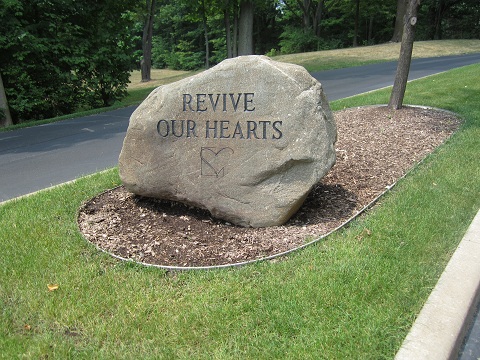
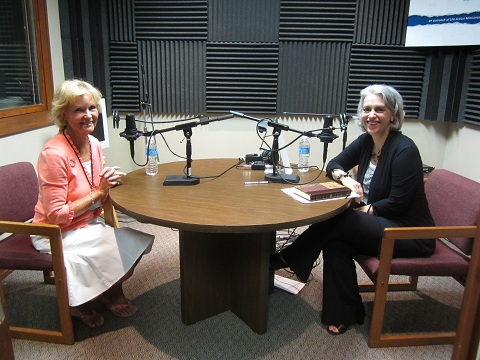
After the Lord prompted me to start posting 3 years ago, he morphed the site into a blog that encouraged widows, then caused a widow-friend to tell another widow about it, who contacted me about writing a book. She “happened” to have influence at a publishing company and put me in touch with an editor, who coaxed me to ask for endorsements, which put me in touch with Nancy Leigh DeMoss, who today recorded a week’s worth of radio programs (with me), challenging widows to seek encouragement through my little book and offering it as the resource on her radio broadcast, “Revive Our Hearts.”

Nancy Leigh has a global listening audience of multiple thousands, which means widows all over the place will be encouraged, and suddenly I understood about the buttered-bread. Embarking on widowhood was a project I never wanted, but as the above chain of events began to unfold, my nervousness pushed me to hand the whole lot over to God (i.e. casting it on the waters), knowing that if I didn’t, I would surely make a mess.

And so it became his blog, his book, his broadcast, his everything. In my ineptness, I knew I could trust God to take care of the things I knew I couldn’t. And as he always does, he followed through exactly as he said.

The Lord is teaching me to put whatever I “have” into his care, without hesitating. But so often I waver. How come? It’s probably because I want to retain control. Of course none of us has the control we think we do, whether it’s our schedules, our investments, our influence, our children, our husbands, or anything else. We don’t control them today, and won’t tomorrow.

Maybe the smartest thing to do, then, is to throw it all on the waters and trust that the God of buttered bread will do the rest.

“Cast thy bread upon the waters: for thou shalt find it after many days.” (Ecclesiastes 11:1)