Cry No More

Half of me is in heaven, the Nate-half. Many of my thoughts have followed him there, and my questions seem never to end. It’s encouraging to know the answers will one day come, and in the mean time, I’m trying to keep my ears and eyes open. Just this week I learned something significant.

We all love the verse in Revelation that says, God will wipe away our tears. The same passage tells us he will also do away with sorrow, pain and death. But there’s one thing about this thrilling statement no one ever mentions. Scripture says the wiping away of tears will happen at the time of the new heaven/earth, and that won’t be our dwelling place until the end-times battles are over and Satan has been permanently defeated.

In other words, not yet. So Nate isn’t living in that new heaven but is definitely living with Jesus. It’s probably the place Jesus referred to as “paradise” when he was on the cross. I’m not worried about Nate, but I do wonder, has he been crying?

It’s very possible.

If God is going to wipe away tears, there will have to have been crying first. What would Nate be crying about? He no longer has cancer and has been freed from back pain. He’s living with the Lord, experiencing the ultimate in security and joy. So what would reduce him to tears? I may be off base, but the answer might be “himself.”

Technically I can’t speak for Nate, especially now that his life has been so dramatically altered, but I can speak for myself. When the Lord confronts me with my own mistakes, failures and deliberate sins now, before I’ve gone to paradise, I’m devastated and am often brought to tears. How will it be to have Jesus looking at me while I’m feeling like that? I know I’m eternally forgiven for those things, but I’ll be acutely aware of the lack of righteousness within me. Surely that’ll make me cry.
Scripture says Jesus will be the one to present me to God the Father as completely sinless because of his having taken all the punishment that should have been mine. Without him, I was destined for the God’s dreadful wrath. So, in that interim period between earthly death and the new heaven/earth, between arriving into Christ’s presence and being presented to God, I wonder if my tears will freely flow.

How could I look at the numerous scars my sin inflicted on Jesus, scars from whips, thorns, nails and a sword, and not feel like weeping?

The more I get to know Jesus, the more I’m sure those stinging tears will serve a positive purpose, because he promises to bring good from everything, even pain and sorrow.

So if Nate has been crying in paradise, and if some day I will too, I know it’ll all be for a good reason.

God shall wipe away all tears from their eyes; and there shall be no more death, neither sorrow, nor crying, neither shall there be any more pain…” (Revelation 21:4)

I promise!

When the local toll roads were first built in the 1950’s, their promise was that all toll booths would be removed after the highway was paid for, about 3 years. Fifty-three years later, we’re still paying.

In the early days of driving the toll road, we received a card when we got on and then turned it in when we got off. Our toll was calculated from the card. Eventually that system was replaced with a cash-as-you-go payment, starting at 25 cents per toll. We had to stop every 30 miles or so to throw change into a plastic bin before continuing.

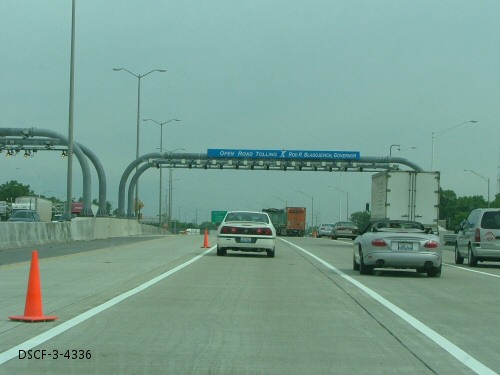
Now, of course, we have “open road tolling” which means the toll road can take our money without us stopping to give it to them. When Nate and I used to drive the toll road between Illinois and Michigan, he’d often complain about the highway authority going back on its word to upgrade the road into a freeway, once a certain amount had been collected. Quite a few people felt that way, expressing their opinions in law suits and citizen groups established to put pressure on the powers-that-be. But today we’re still paying.

Keeping our word is important. It’s a character quality seen less and less these days and runs rampant in the political world with unmet campaign promises. But the most important place to keep our word is in one-on-one relationships such as husband-and-wife, parent-and-child, friend-and-friend. If I was given the chance to do one thing differently in my past, it would be to keep my word better, to do exactly what I said I would do.

If I told Nate, “I’ll pick you up at the train at 6:35,” I’d be there waiting for him rather than allowing him to wait for me. If I told the kids, “Don’t do that again or you’ll get a spanking,” I’d follow through.

It’s especially important to keep our word when we tell someone we won’t share a confidence with anyone else. If we violate that, our word becomes worthless, not to mention the damage we do to that person and our relationship with him or her.

I’ve asked myself, “What would the Christian life be like if God acted like I did and didn’t keep his word?” He’s told us that he does everything he says he’ll do, and Scripture backs that up. He’s kept his promises in my own life, and I’ve seen him do it in others’. Because I’ve experienced failure at always keeping my word, I’m doubly appreciative that I can count on him to keep his. After all, his has eternal consequences, and I’m trusting him 100%.

Driving the toll roads is a helpful reminder that I want to be trusted to keep my word. And maybe in the long run, the toll road will make good on its promise, too. The latest word is that it’ll be paid for in 2034. If I still have a driver’s license at 89, you’ll find me driving the freeway.

“Set a guard over my mouth, Lord; keep watch over the door of my lips.” (Psalm 141:3)

A Radical Example

Whenever I’m around young children, I’m fascinated by their learning style as miniature mimickers. Whatever we do, they try to do. Our flawed examples are, unfortunately, passed along to our kids, which is exactly why I’m thankful we have Jesus as a better standard. We know he never sinned, so we can guess what his first 30 years were like, which is what we are to imitate.  

He obeyed his parents 100%, although surely there were times when he felt like disobeying. He put his siblings ahead of himself and observed what others needed. He never took anything that didn’t belong to him, and never swore. He participated wholeheartedly in every Sabbath day worship, and nothing in his life mattered more than his relationship with God.

He never longed to own something that belonged to another person and never said nasty things about someone else to make himself look better. He never told a lie or withheld the complete truth, and because he wasn’t married, he never slept with a woman.

We ought to be stretching ourselves toward leading this kind of a life.

Once Jesus began his formal ministry as a teacher, he continued to be a spectacular model. He didn’t hide out in solitude but spent time in public, healing, helping and educating people. He was a radical, a strong person who shook up the status quo. He revolutionized the Jewish religiosity of the day and trimmed down hundreds of laws to two: loving God and loving others.

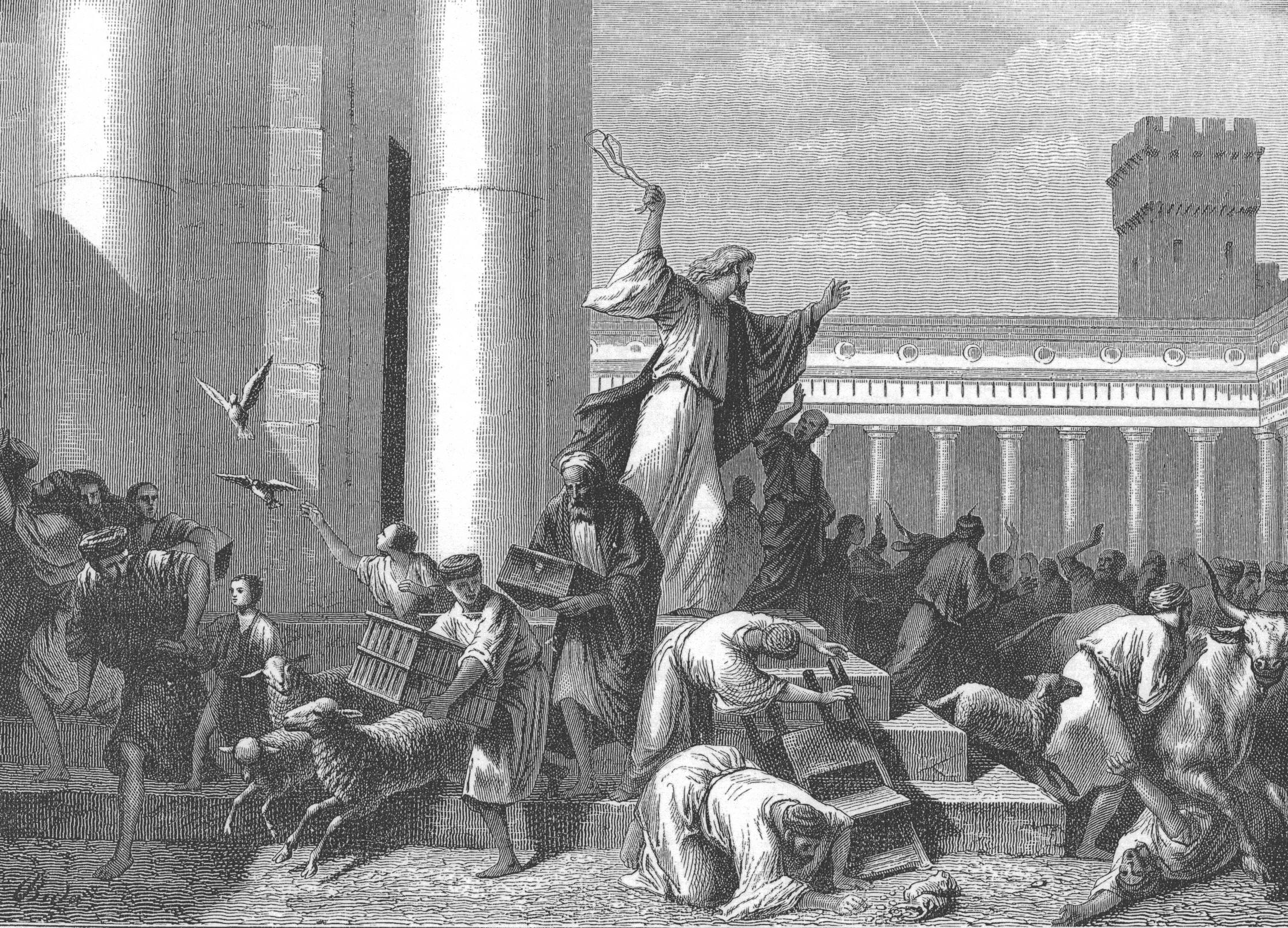
I’m glad Jesus’ angry outburst at the temple was included in Scriture. The story describes him responding negatively to merchants who were selling animals there. The Bible says he made his own whip to rout them out, probably by striking directly at them. I find it fascinating that in his anger, Jesus took time to find the materials he needed and weave together an effective whip.

He then showed strength and determination as he chased out men and animals alike, following that by scattering their coins all over the floor. He finished by flipping over the massive wooden tables used to transact business, proving he was not the weakling many pictures show him to be. Finally he shouted, “Get these [animals] out of here! Stop turning my Father’s house into a market!”

We already knew we were to model our lives after the “gentle Jesus, meek and mild.” But did we know we were to imitate this other Jesus, too? None of us will ever need to do exactly what he did with a whip in a temple. But we’re all called to live radically with a personal passion to pursue righteousness.

I’m wondering if I’ve even begun.

”All of your works will thank you, Lord, and your faithful followers will praise you. They will speak of the glory of your kingdom; they will give examples of your power.” (Psalm 145:10-11)