
Fragile Love

This afternoon when Jack, Louisa and I were at the beach on what felt like a mid-summer day, we came across a deeply-cut, stick-scrawled message in the sand: “Will you marry me?”

No one else was around. “What do you think?” I said. “Authentic?”

“Well,” she said, “it would be the perfect idea for a couple that loves the beach.”

Then she noticed a second etching. “Look at that big heart!”

Sure enough, there was not one but several hearts, each one a few paces from the other in a long line, much like stepping stones. “I’ll bet he brought her to the beach and led her along the hearts till she came to his question at the end.” Louisa said. “How romantic!”

We walked both directions looking for a big “YES!” but considered it might have been washed away by the waves.

In the 1050’s, Pat Boone sang a song called, “Love Letters in the Sand.” It started happily:

On a day like today
We passed the time away
Writing love letters in the sand.

But by the end of the song it had turned into a tale of woe:

Now my broken heart aches
With every wave that breaks
Over love letters in the sand.

Human love can be fleeting, nearly as fragile as words scratched in sand with a stick. Our feelings for someone can disappear as quickly as the tide can erase sandy letters.

*      *      *      *      *      *      *      *      *     *

As we continue through the season of Lent toward the cross, I’m glad Jesus didn’t approach his mission based on his feelings at the time. If he had, he wouldn’t have died for us, because he sure didn’t feel like it. Instead he summoned up an unshakeable will to do it God’s way rather than his own. And it was for one reason: he loved us.

If only we could love like that! We don’t, because it requires setting aside our feelings to favor someone else. Instead we say, “We aren’t like Jesus! We can’t possibly love like him.” Would he agree with that?

He’d probably say, “You think you can’t love like I do? How about if I do it for you, from within you? Could you do it then?”

And of course the only correct answer is, “Yes.”

Maybe that’s where we slip up. We forget to ask him to love through us, and try to do it by ourselves. The Bible says, “No one knows the thoughts of God except the Spirit of God.” (1 Corinthians 2:11) Similarly, no one can love like Jesus unless the Spirit of God loves through him. By ourselves, we can’t do it.

Today at the beach as we came to the end of our search for more messages, we saw blurred letters in the sand that had been partially washed away by water: “[blank] and Jenna.”

I hope Jenna and her fiance’ will do better than Pat Boone did.

“The Spirit God gave us does not make us timid, but gives us… love.” (2 Timothy 1:7)

Don’t worry. Be happy.

My grandson Nicholas, a new 3 year old, has recently finished potty training and is now enjoying the perks of no more nappy changes, along with the delight of wearing picture underwear.

Katy and Hans motivated him by using a reward chart with happy-face stickers for each success. Taped above the toilet, those lengthening lines of stickers gave Nick encouragement each time he successfully used the toilet.

When we were 3, a happy-face sticker was all we needed to make us happy. As we grew older, we needed bigger rewards like trips to the ice cream store, allowances, a day at the beach, or sleep-overs. Eventually we needed paychecks, new cars, vacation getaways.

Is it ok to seek happiness?

Scripture is dotted with quite a few happy faces. Ecclesiastes says, “I know that there is nothing better for people than to be happy and to do good while they live. That each of them may eat and drink, and find satisfaction in all their toil—this is the gift of God.” (3:12-13)

We see that it’s ok to be happy, as long as we recognize it as God’s gift. When we begin feeling entitled to it, God will surely withdraw it. Our being happy isn’t his undercard. He’d rather see us obeying his instructions, studying his Word, drawing closer to him, submitting to his will.

But most of us just want to be happy. Sometimes it comes to us briefly but then disappears, making us angry. So what should we do? Are we supposed to find contentment in un-happiness?

Another Ecclesiastes passage provides the answer: “When times are good, be happy; but when times are bad, consider this: God has made the one as well as the other.” (7:14) God wants us to connect happiness and sadness to him, knowing there are important purposes in both.

This morning I struggled in prayer for more than 90 minutes over some exceptionally difficult issues, pouring out my longings one after another. I ended by expressing frustration to God for his lack of action on my requests after so many years of praying. And I was quite unhappy!

He quickly chided me, reminding me (in my thoughts) that happiness without end isn’t scheduled till heaven. Claiming it now is getting the cart before the horse.

Later, in my Scripture reading, he said the same thing in a different way: “Is anyone happy? Let them sing songs of praise.” (James 5:13) In other words, even when he gives a bit of happiness, the point of it isn’t to please us but to motivate us to praise him. When happiness comes, we’re not to hold onto it but are to give it right back to him.

And when we do that, we get something far better than our own happy faces: the happy face of our Lord.

“May the righteous be glad and rejoice before God; may they be happy and joyful.” (Psalm 68:3)

All Tangled Up

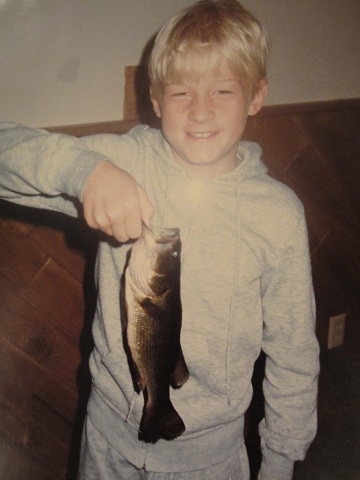
When Lars was 8, he loved roaming our neighborhood in search of pets, but not the traditional kind. Throughout his childhood he had a heart for all things cold-blooded: turtles, birds, lizards, fish, and (gulp) snakes.

I well remember the day he came running into the kitchen with a 3 foot long black garter snake draped over his arm. “Mom! Mom! Look what I found!”

He brought the snake’s ugly face up close to mine and said, “Look at his tongue!”

I lunged backwards, filled with fear but trying not to show it. “Yes, I see. A snake!”

“Pet him, Mom. He’s really smooth!”

I forced myself to comply, not wanting to dampen Lars’ enthusiasm, and gingerly touched the snake’s middle.

“Smooth, huh?” Lars said.

“Very,” I said, quickly withdrawing my hand.

As Lars talked he lovingly stroked the length of his new friend like it was a puppy. “It’s ok if I keep him, isn’t it?”

“Only if he stays outside.”

Lars and his snake disappeared, but soon he called me to the front porch. He’d found an old wooden bushel basket and had filled it with fresh grass. “I’m gonna catch crickets for him, Mom. He can live right here by the front door.”

But I knew that snake would slither out of his basket the first chance he got, and by morning, he was gone. Lars was disappointed, but I was elated.

It’s probably wrong to hate one of God’s creatures, but I hate snakes. They’re predatory, quick moving, and unpredictable. That’s why I was startled yesterday to see a snake while walking Jack. It was wound around a small tree in our neighborhood, as big as Lars’ garter snake, but brown.

Fear flashed through me, but in seconds I saw the snake was only an innocent vine crawling up a tree.

But the vine wasn’t really that innocent. It had nearly strangled the life out of the tree. Bulges in the trunk resembled prey being squeezed by a python, and it had climbed high enough to coil around a second tree and then a third. The vine, once a tiny, supple stem of pretty ground cover had grown to 30 feet of stiff strength.

Many of life’s temptations start small just like the vine but end up squeezing the life out of us. It might be a destructive relationship, an addictive habit, an inappropriate goal, or just our belief in a lie. We think we’re stronger than we are and have more will power than we do. The “vine” tickles our ankles, but we ignore it, and it climbs our legs. Before long it’s gripping our hearts and we can’t free ourselves.

But God owns the clippers and is a pruning expert. All it takes is our permission for him to make the cut.

I probably won’t tamper with our neighborhood forest, but it’ll be interesting to see who prevails: the tree or the vine.

“Throw off… the sin that so easily entangles.” (Hebrews 12:1)