Failing and Falling

In the last 48 hours wild winds and rains whipped through our neighborhood causing umbrellas to flip inside-out and autumn pumpkins to roll off porch steps. Inside the house we could hear Lake Michigan roaring, even though the windows were buttoned up tight.
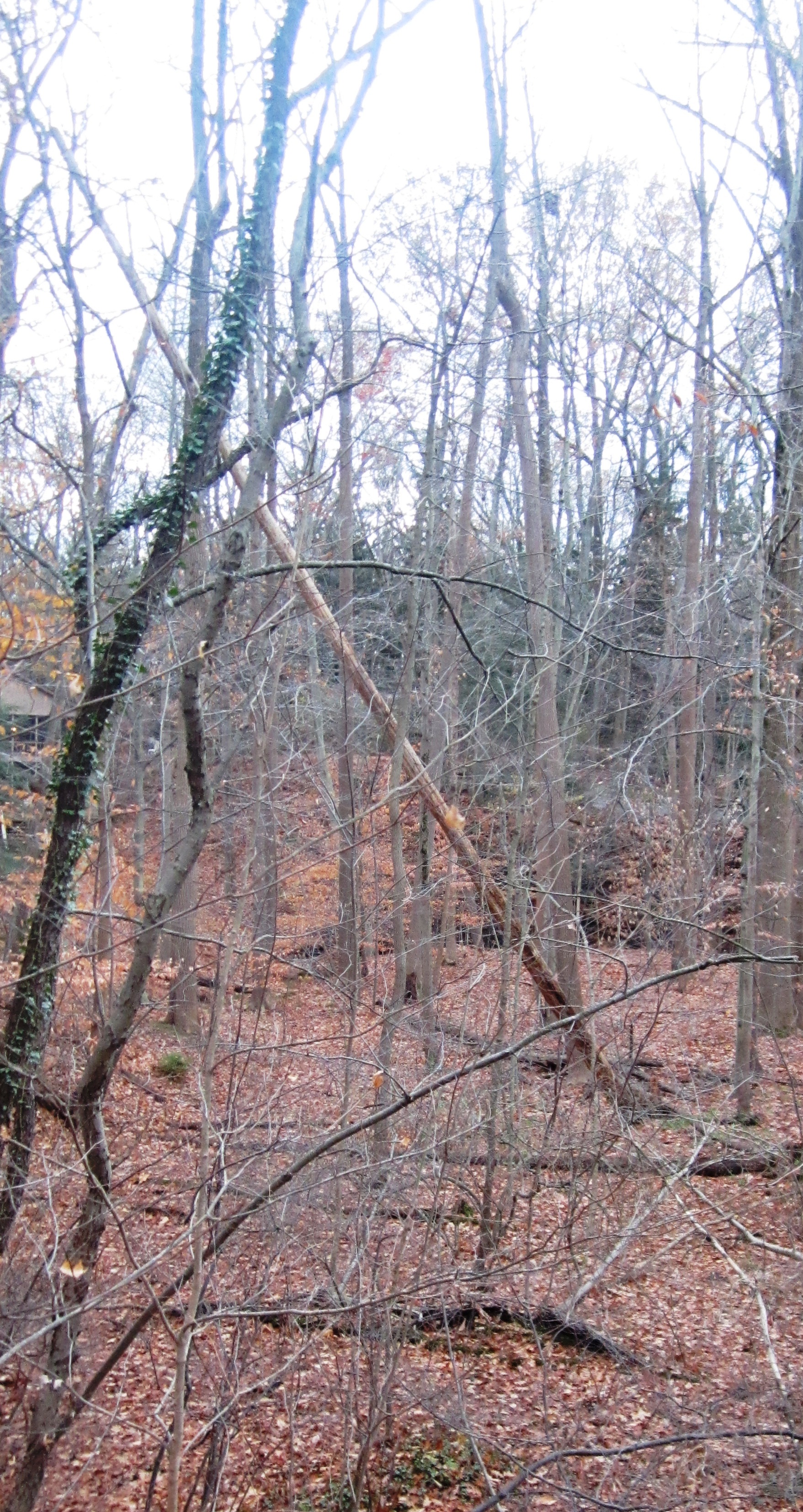
Caught.Stray tree limbs flew everywhere, and in our back yard a tall, pole-like tree went down, though not all the way. It fell into the “arms” of a nearby tree instead.

The visual of this partially-fallen tree reminded me of a popular expression: “If you fall, I’ll be your soft place to land.” In other words, you’ll go down, but you won’t have a crash landing.

That’s what happened to the tree, and for those of us who are Christians, that’s what happens when God offers himself as our soft place to land.
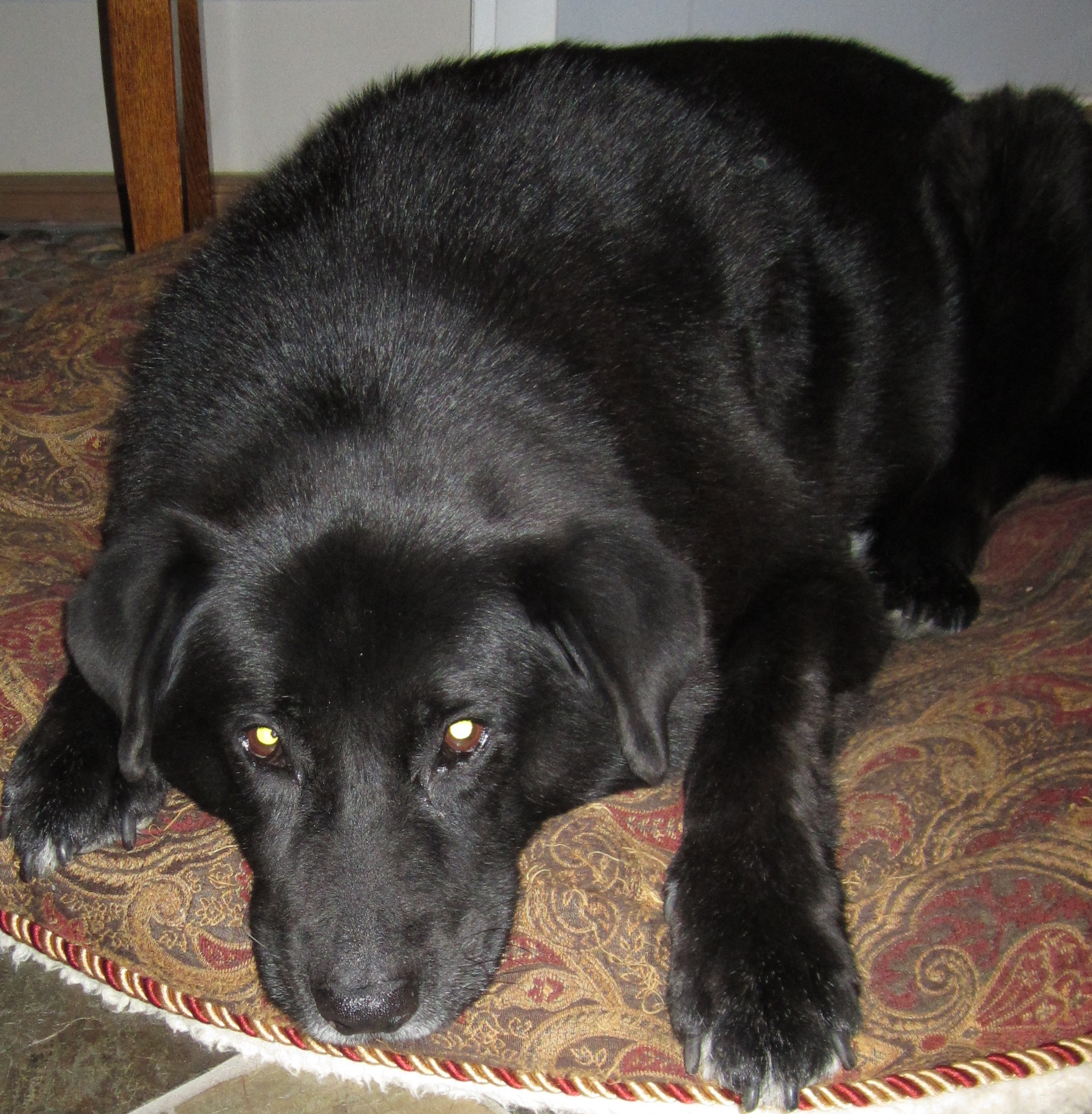
Black JackA few months ago I turned around in a dark room and didn’t notice my big black dog Jack lying on the dark-colored carpet. As I stumbled over him, I felt myself going down, unable to catch myself. I hit the floor with such a loud crash that my children came running. It was a hard landing for sure, though no permanent damage was done. If only someone had caught me, even just a few inches above the hard landing, the result would have been quite different.

And that’s what God does for us.

We may be on a fast fall toward disaster and might even be the cause for the whole mess by our own bad decisions, but still he’s willing to catch us. It may not always feel that way as we’re going down, though. During a circumstantial fall, we look for his rescue and wonder where he is. “What’s keeping him?” we say. “Why doesn’t he do something?”

He’s well aware, but often lets us learn the hard way, because that’s when the lessons stick best. As Pastor Erwin Lutzer says, failure is frequently the back door to success. So we feel ourselves falling, failing, dreading the hard landing of horrendous circumstances, and we brace for impact. Then when it doesn’t come, at least not as severely as we thought it would, we wonder what happened.

That is God’s catch.

One of the big reasons he lets us fall/fail is so we’ll recognize our need for him. If we continually succeed at everything we try, we’re much less likely to reach out to a Savior. Recognizing our own need is an important prerequisite for being able to rest in the Lord after he catches us.

When I look out my window and see that partially-fallen tree, I wonder if spring will find it continuing to grow, despite resting on the other tree. After all, it didn’t crash all the way to the ground but found a soft place to land.

“I know, my God, that you test the heart and have pleasure in uprightness.” (1 Chronicles 29:17)

Studying the Pictures

I love looking at photographs of Nate. Now that no more can be taken, each is priceless. When pancreatic cancer came along, a widow-friend advised me to “take lots of pictures of him.” That sounded odd, since I already had 190 photo albums in my basement.

Not himself.But there were two roadblocks to taking those pictures: (1) quickly, as the cancer gained ground, he didn’t look like himself; and (2) how do you snap pictures of someone who knows he’s dying, without making it awkward for them?

Once it was all over, I remembered what my friend had said and wished I’d followed her advice about photos, because we have precious few of his 42 days of illness. That’s why I often find myself in my basement albums studying the face of my husband.

What impresses me again and again is that in most of the pictures Nate has a child or two in his arms or on his lap. Not being a “natural” with children when we married, I’m reminded of how significant this effort was. These pictures, the ones in which he’s busy “doing” for his children (and by that, for me) are the ones that mean the most.

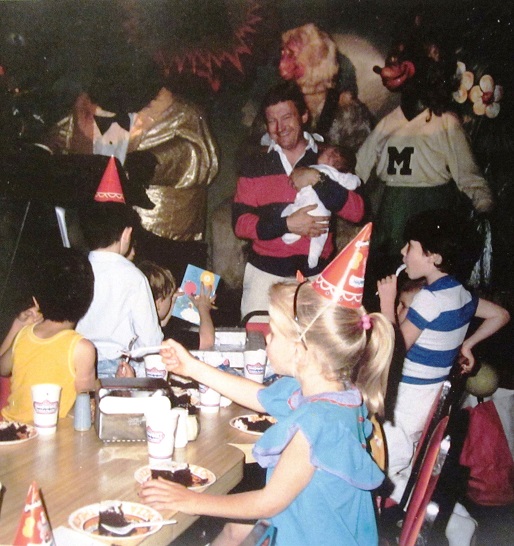
At Chuck E CheeseFor example, here’s one taken at Chuck E Cheese’s. The occasion was Klaus’ birthday (turning 6), and Nate is holding 3 week old Louisa, his 6th child, while trying to manage the rest of his own children and a dozen young guests. The Chuck E Cheese entertainment stage was in full swing with it’s robotic characters singing at peak volume, a frenzy at best.

Nate was working hard, and I knew he must have been hoping the event would end soon, so we could go home to normalcy. But from his place across a mob of children, he caught my eye and flashed a smile. It was one of those very private moments between a husband and wife in a very public place. And today it’s a precious treasure.

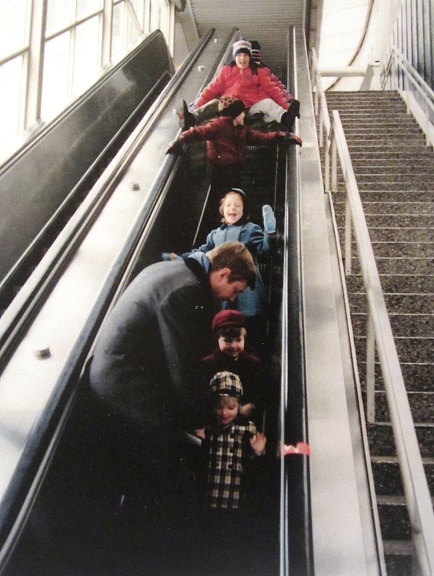
Taking care of businessAnother picture I’ve studied recently was taken on Christmas Eve. We’d lunched at Marshall Fields’ in Chicago’s Loop and were on our way back to the suburbs on the “L” train. (We only had 5 children at the time, though a nephew is also in the picture.) But once again, Nate is hard at work, watching over the precarious steps of a two and three year old about to stumble off the bottom of an escalator.

My photos are a poor substitute for the man himself, but they’re wonderful gratitude-boosters for the wife he left behind. Maybe it’s not such a bad thing after all that I didn’t take many pictures while he was sick. Seeing him in action (and in good health) is probably much better.

”Every time I think of you, I give thanks to my God.” (Philippians 1:3)

A Roundabout Route

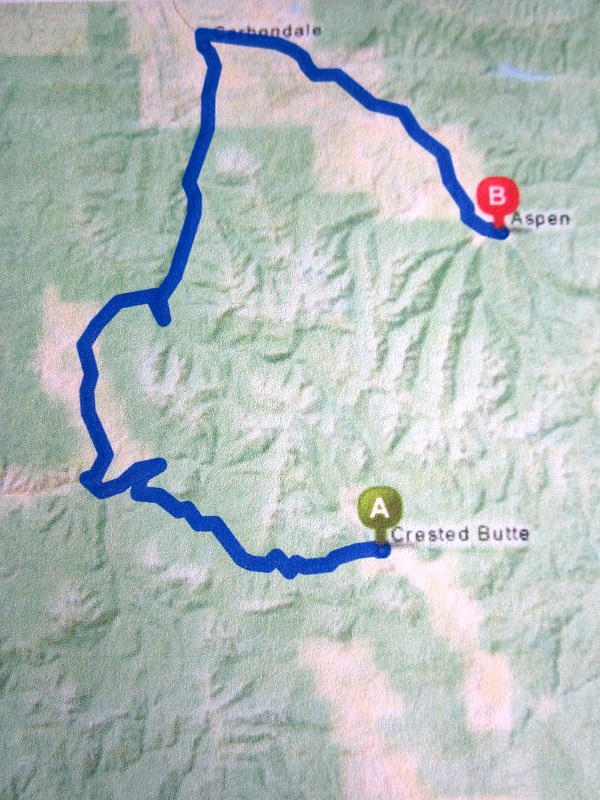
This week when our prayer group of 5 ladies met to pray, Abigail began our time with an effective visual. She opened her iPad and showed us a picture (via Google Map Maker) of the route she would soon be driving between two Colorado destinations: Aspen and Crested Butte.

MapAlthough Abigail assured us the distance between the two towns was less than 10 miles (just long enough to make a nice hike), the quickest way to drive there was to travel in a roundabout way on mountain roads for more than 200 miles to the tune of 5 hours.

“Isn’t this the perfect picture of prayer?” she said, putting her finger on point A. “Here’s the request, and immediately God starts down the road to his answer, which is over here,” she said, pointing to B. If we were God, we’d rush the answer across the quick 10 mile route rather than taking the convoluted circuitous way. So why doesn’t he do that?

So often we pray as if we’re a waitress writing down the ask for a short-order cook, but God sees the process differently. On Tuesday mornings we have over 200 requests to pray over in 2 hours. This means we have to move quickly, which is why we’ve grouped the needs according to topic/subject. (God’s Wish List)

The only reason such a volume of needs doesn’t overwhelm us is our belief that God himself is in the room with us. All we have to do is enter his presence and lay out the requests. Then, much to our delight (and relief), he takes over from there.

But that’s the thing. He doesn’t take someone with problem A and put him/her on a rapid transit line to connect speedily with solution B. He could say, “Let’s see…. I’ll find the right surgeon for that one, put this other couple in front of a good marriage counselor, and arrange the perfect job interview for that other one. Check. Check. Check.”

But that just isn’t him. He’d rather take his time… and ours. That’s because he’s not only concerned about those being prayed for but also the ones doing the praying. All have needs, and when God maps out his choice of a route from request to answer, he’s intending to work wonders all along the way.

DetourGoogle Maps has an interesting caveat at the bottom of its directions page: “You may find that construction projects, traffic, weather, or other events may cause conditions to differ from the map results, and you should plan your route accordingly. You must obey all signs or notices regarding your route.”

What a great summary of how God works, dotting the route from request to answer with unexpected delays. The longer the delays, though, the grander the answers. And maybe that’s the reason we ladies continue to travel the route to our Tuesday morning prayer meetings…. so we don’t miss a single one of those grand answers!

“Pray without ceasing.” (1 Thessalonians 5:17)