Making Memories

When our Hans was two, I often said, “Hans, come over here.” He would toddle up to me, and I’d say it again. “Hans, come here.”

Then he’d say, “But I am come-here-d.” And I’d laugh and scoop him up for a hug.
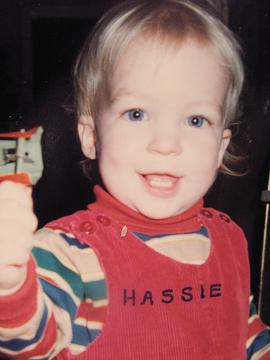
Eventually he figured out this ritual had nothing to do with asking him to come over and everything to do with what he said when he got there. Eventually he’d run to me without having been called and say, “I’m come-here-d, Mama!” waiting for the hug to follow.

Every parent has a million of these happy memories tucked away in a mental treasure chest. They’re part of the family narrative, bits of glue that bond individuals together.

Hans is married now, has a family and lives 4000 miles away in England, but because of our shared memories, we remain close. He’s making new history now, and I’m not part of it. Gradually as the years go by, more and more of his time will be lived with others, which of course is how life goes.

When I think about Nate, the situation has several parallels. He and I each had our parent-child relationships for 20 years before we met, after which we began making memories together. The toddler-Hans memory was just one small part of what Nate and I shared.

Then he died. His departure was similar to when Hans moved to England. Both left quickly, and distances were great, but when Nate moved, he relocated farther away than any point on our globe. I can still get to my son but can no longer get to my husband.

As I think about Nate in his new life in that hidden world, I know he’s making a million fresh memories, none of which include me. The flip side of that scenario is also true. The memories I’m making, many of them delightful, no longer include Nate. For example, although he’d planned to live with me in Michigan, I’m experiencing my first winter in the “summer cottage” without him. Also, this year I’ll turn 65, and all the jokes we made about signing up together for Medicare now only apply to me. I will continue to age, but his birthdays stopped at 64.

Three of his grandchildren will join our family in the next three months, none of whom will know their grandpa. My travel to help with these babies and their toddler siblings, full of bright moments, will occur without him. Our family reunion this fall, returning to a place Nate chose and loved, will be full of satisfaction and significance for all of us, except Nate.

I believe these thoughts are God’s gift to me, encouraging me toward the future. Although my first choice would have been for our family leader to still be leading, the Lord is leading now and is hinting at wonderful memory-making to come. The fact that Nate is a million miles away having a spectacular time without me doesn’t mean I ought not to keep making happy memories right here where he left me.

I believe Nate and I will always be who we are, even in the hereafter. God went to the trouble to design people to be unique, each different from all the others. Why would he homogenize us in heaven? Just as Jesus prompted his friends to notice he was the same recognizable person after his resurrection as before, I think Nate will be the same recognizable man when I see him again.

Once in heaven, we’ll most likely remember our earthly history together while catching up on the separate memories we’ve made during our time apart. The Bible says there are no marriage partners in heaven, but I’m sure Nate and I will be good friends, just as we were on earth, but better.

Erwin Lutzer, one of my favorite pastors, said, “Death breaks ties on earth but renews them in heaven.” I believe it wholeheartedly. In the mean time, I’ll do what Nate did. I’ll “soldier on” and take pleasure in making memories where I am.

Eventually God will ask me to “Come here,” and one day I’ll be standing next to him, thrilled to say, “I am come-here-d!” And after I get my hug, I’ll look up, and there will be Nate.

“God raised us up with Christ and seated us with him in the heavenly realms in Christ Jesus, in order that in the coming ages he might show the incomparable riches of his grace, expressed in his kindness to us in Christ Jesus.” (Ephesians 2:6-7)

Scent or Smell?

Have you ever stepped into an elevator with a woman who’s wearing too much perfume? It’s enough to make you step out and head for the stairs. That’s the way Nate wore cologne. His preference was Aramis, a pricey scent introduced in 1965. He was wearing it in 1966 when we met as college seniors and was still wearing it on our wedding day three years later.

I liked Aramis, even lots of it. The problem came when I was expecting baby #1, in 1972. Funny things happen to normal women when they become pregnant, and my hormones birthed a hatred for Aramis. It no longer smelled good; it just smelled. I couldn’t stand to be in the same room with it, which presented a major problem for our marriage.

“Pour it down the drain,” I insisted, but Nate loved his Aramis and didn’t understand my turncoat behavior. By baby #3, I’d done so much complaining, he finally surrendered, and I know why. Desperate to get my way, I’d told him, “If you keep wearing it, I can’t kiss you anymore and risk that stuff rubbing off on me.” That did it.

Trying to remain calm amidst the churning emotions of his pregnant wife, he asked, “So, what cologne can I wear?”

“Old Spice.”

I saw him turn up his nose and tip his head as if to say, “Are you kidding? That’s what our fathers wear!”

But he didn’t say it, and soon a stopper-topped, milk-glass Old Spice bottle appeared in our bathroom. The familiar ship on the front was comforting to me, and the scent was pleasing since it reminded me of… my father.

Nate saved his bottle of Aramis for years, hoping I’d eventually warm up to it again. I left it there under the sink, thinking I might enjoy it after we finished having babies, which took 17 years. In the mean time, he got plenty of kisses while wearing Old Spice. Sadly, though, my distaste for Aramis never went away.

But 2005 was a banner year, because something happened that opened the door to Aramis. Our golden retriever had a mental snap, and though she loved me, attacked me with an intent to kill. Snarling and growling, she bit me repeatedly, tore my skin open and shook me like a captured rabbit. Two days later, admitted to the hospital with a serious infection, I was given “the atomic bomb of antibiotics.” It was a last-ditch effort to save my hand from amputation.

“You’ll probably smell something terrible inside your head for several weeks,” the doctor told me. “It’ll be the medicine. And more than likely it’ll take away your sense of smell. But which would you rather have, a hand or a sense of smell?”

I picked my hand, and the doctor was right about my nose. After those antibiotics I couldn’t smell anymore, not even Nate’s Old Spice. So one day I told him, “Guess what. You can wear Aramis again, because I can’t smell you anymore.”

He immediately got rid of his Old Spice bottle, but rather than resurrect the Aramis, he experimented with other colognes. I bought him a bottle of Brut, thinking Elvis Presley’s choice would make cologne-wearing fun again, but amazingly, he settled on Mennen Aftershave, a mild scent bought at Walgreens for $1.99.

Today at the cottage I found three bottles of his bright green Mennen under the bathroom sink. I opened one to sniff deeply, wondering if I might be able to smell Nate, but nothing came. Since our boys had no interest, I simply poured it all out. As I watched his Mennen swirl down the drain, I realized in a new way what a great love Nate had for me.

It’s the refusal to give in to the whims of a spouse that can one day become the spontaneous combustion of divorce. Nate didn’t want to give up his Aramis, and he held on for three babies trying to convince me. But when he saw I wasn’t going to bend, he did the bending for both of us and put it away. At the time I didn’t appreciate the significance of what he’d done. I probably said something like, “Thank goodness!” or “Finally!”

Today I say, “Shame on me.”

My objection to Aramis was valid, but my mistake was in failing to honor my husband for his willingness to give up what he’d wanted to keep. More and more I’m realizing that much of the reason our marriage worked was because Nate acquiesced to my desires. I wish I would have looked for more ways to give in to him, and oh how I wish I could thank him now… for putting away his Aramis, way back in 1977.

“Keep fervent in your love for one another, because love covers a multitude of sins. Be hospitable to one another without complaint.” (1 Peter 4:8-9)

Facing a Giant

Looking out our front windows through a grid of icicle-bars, I saw three flashes of color dart past. Cross country skiers, right on the streets. With seven inches of fresh snow, they were taking advantage of winter on our unplowed roads. An hour later, as I was shoveling the drive, they glided by in the other direction. “Spectacular, isn’t it?” one of the women shouted as she passed me.

Once I got to the grocery store, employees chatted enthusiastically about the blessing of a good snowfall. “Please let me take your cart out for you,” the bagger said, grabbing his jacket. “I haven’t been outside for a while and want to get back in the weather.” This was a bagger-man in his sixties whose enthusiasm was impressive.

As a new Michigan resident, I was gaining insight into my fellow Michiganders, people who’ve dealt with the challenge of winter every year. Watching the bag-man wrestle my cart through deep drifts in the parking lot, I coaxed him to complain. “Will you have to do a lot of shoveling when you get home?”

“I love to shovel,” he said, with a dip of his chin. “What would life be without a challenge?”

The man had missed his calling. Instead of bagging groceries he should have been running a think tank. Of course he was right about life’s challenges, although most of us avoid them. That’s probably because taking up a challenge can end badly, not to mention the pain that can be involved. There is also a high probability of failure.

I love the biblical story of the warrior Goliath taunting the whole Israelite army. His specific challenge was for them to send one individual to “come and get him.” It was a double-or-nothing dare after which the loser’s army would become slaves to the winner’s army.

David couldn’t believe any Israelite would shrink back from Goliath’s challenge. After all, Almighty God was on their side! He didn’t even have to think about it but went after Goliath with fervor. The Bible says, “As Goliath moved closer to attack, David quickly ran out to meet him.” (1 Sam. 17:48)

Since he was just a “ruddy-faced boy” (v. 42), we could conclude he was motivated by the foolishness of youth and didn’t know any better. But David knew enough, that the God of Israel controlled everything, including a nine foot tall ogre.

We all know the happy end of this story, how David’s one smooth stone embedded itself in the evil giant’s forehead, knocking him flat and giving David time to rush in and kill him with his own sword. A giant-sized challenge was accepted and dominated, and for the rest of his life, David was a hero.

Although I never met David, I do know another hero I very much admire, my husband Nate. He was presented with a challenge few people on this earth are given: militant cancer along with a death sentence that would conquer his life in a few weeks. Most men would have run from this enemy like the Israelites ran from Goliath. Some might have exited the fight altogether by denying reality. Others might have railed against God for allowing the battle in the first place. Nate did none of these.

In my eyes he was a hero in that he squared off with the challenge presented to him. Although he responded to the appalling cancer news with shock and revulsion, before long he said yes to the challenge. Throughout his combat with disease, he was required to move in and out of acute pain physically, emotionally and mentally, as well as bear up under anguish of heart. Yet he didn’t shrink back or even ask why. Instead he asked, “Why not?”

One morning about half way through his 42 days of cancer, I asked him how he was feeling after a rocky night. Instead of answering me directly, he answered like a man in the midst of a battle. “Well,” he said, “we soldier onward.”

Some might say, “Yes, but he lost the fight. He died.”

To them I say, Nate won the ultimate prize, knocking death flat just as David knocked Goliath flat. He used death as a stepping stone into a joy-filled eternity, conquering his giant-cancer-challenge in the process. He won, and he is my hero.

“I press on toward the goal to win the prize for which God has called me heavenward in Christ Jesus.” (Philippians 3:14)