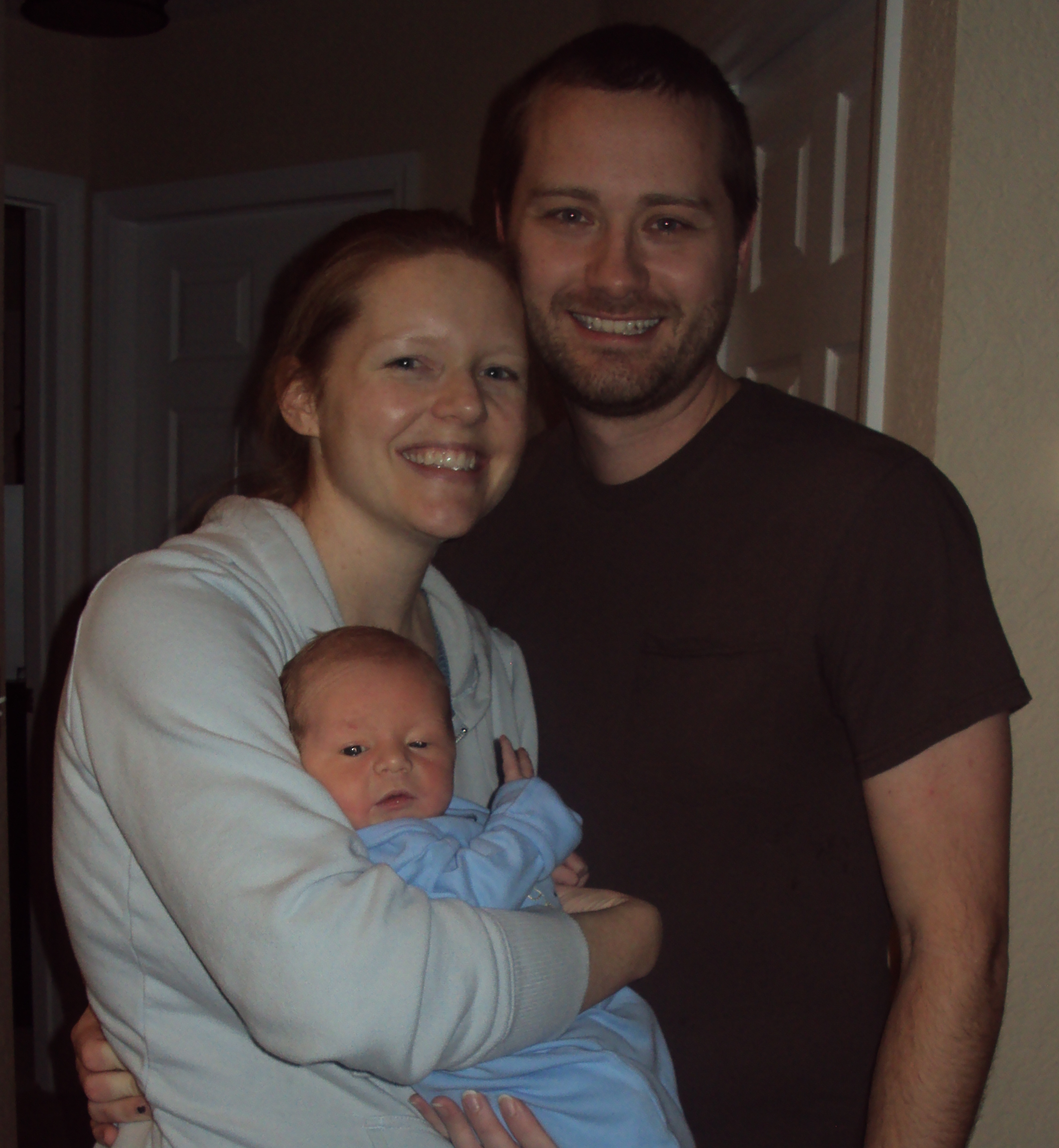
Watching Linnea and Adam work with Skylar and Micah is exhausting. This afternoon as Linnea fed Micah in the bedroom, I was in charge of Skylar, fresh up from a brief nap. (All her naps are brief.) While trying to read her a book, the last thing I remember was her pointing out that the throw pillow on the couch was green. It was when I put my head next to the pillow that I went unconscious. Thankfully it wasn’t but a minute or two before she yanked the pillow out from under my head, and I was back on duty. What do I have to be tired about? I’m only the grandma.
I marvel as I watch Skylar’s soft-spoken, patient parents deal with her and her baby brother, never breaking stride, never breaking down. Tonight, as the rest of us were watching a family slide show on TV, Skylar suddenly had the desire to scream as loud as she could. Nothing was wrong, and she hadn’t been frustrated trying to make something work. She just felt like screaming.

This 18 month old reached a volume so loud we were all incredulous such room-filling shrieks could come from the lungs of such a small person. Bath time arrived quickly after that, but the frenzy continued into the tub and eventually into her room as her daddy put her into her PJs, once again without breaking stride. Even with the door closed, all we could do in the next room was look at each other and whisper, “Wow…” Patient Jack began whining to be let outside.
Parenthood is difficult. Linnea read more than 20 books in preparation for it and was still in shock when reality hit. Then after having finally found a system that worked, adding a second baby to the family has demanded a complete overhaul. New rules and higher stress levels accompany the changes in this family and others, as young parents are often stretched to the limit. That’s why TV shows about large families are fascinating. We watch and wonder, “How do they do it?”
God could have made parenting children as easy as growing vegetables in a garden. Instead he set it up so young moms and dads fall off the cliff of exhaustion and surrender even such basic rights as privacy in the bathroom or being able to eat. There must be something valuable about starting off with such deprivation, and it probably has something to do with becoming a better person by being forced to sacrifice.
If we’re given the option of sacrificing our own quality of life for the benefit of another adult, we’re not likely to do much of it. But when a young child requires exactly that, we willingly give. The reason is because babies aren’t capable of doing anything for themselves, and their parents know it. They sacrifice according to the need. Maybe that’s why it’s hard for adults to give significantly to one another. Unlike babies, all of us are too good at hiding our needs.
Tonight Linnea and Adam may not get much sleep as they sacrifice and care for newborn Micah, but no matter, because tomorrow will bring a clean slate. After the demands of today with their resources depleted, they’ll greet the dawn with a fresh supply of whatever is needed, even if dealing with needless screaming becomes part of what’s demanded.
And therein lies the key to successful sacrificing for all of us. When we give without expecting anything in return (as we do for little children), God provides a fresh supply of whatever has been used up so that we can give again. We can serve, endure, assist and help without worrying we’ll run out, because strangely, as we pour ourselves out with selfless motives, God pours more in, according to the need.
“Don’t give reluctantly or in response to pressure, for God loves a person who gives cheerfully. And God will generously provide all you need. Then you will always have everything you need and plenty left over to share with others.” (2 Corinthians 9:7-8)