
Goodbyes aren’t so good.

When I was a child, goodbyes were important. Mom always made a big deal of saying goodbye to Dad as he headed out the door each morning, kissing and hugging him until he finally said, “Alright, that’s enough.”

After their children were grown and married visiting “back home,” Mom and Dad would stand in their driveway waving us off until we were out of sight.

As an elderly widow, Mom would come over for dinner, after which it was our turn to stand in the driveway waving to her until she was out of sight. She wanted us to see her wave back so always drove off with the inside car light on, still waving as she rounded the corner.

Nate and I said countless goodbyes to our seven children as they left home for college or mission trips or marriage, most farewells once again taking place in the driveway, waving until they were out of sight. Goodbyes are important because, as Mom used to say, “You never know if it might be your last.”

The hardest goodbyes take place in the moments when someone is dying. We’ve said this kind of farewell to Dad, then Mom, and three months ago, to Nate, each as they took their last breaths. These were the most difficult because unlike all the others, we knew it would be our last goodbye.

Tonight I had to say goodbye to Louisa and Birgitta. Their Florida visit had to end so they could return to their jobs in Chicago. Although they’re 19 and 21, seasoned travelers to whom we’ve often said goodbye, today it was tough. I felt weepy as I watched them walk through the airport automatic doors pulling their wheeled bags. I stood waving until they were out of sight, calling after them, “I love you!” as other travelers looked at us. All goodbyes are more potent since Nate died. Even saying goodbye to someone I will see in a week’s time is cause for tearing up. Mom’s words always ring in my ears: “You never know…”

The Bible is dotted with significant goodbyes, but the most difficult must have been when Jesus’ disciples separated from him during the events leading up to the crucifixion. Although John stood at the foot of the cross and participated as Jesus took his last breath, the others threw away their chances for loving farewells.

Later, after the resurrection and their bonus time with Jesus on earth, the disciples had to say goodbye all over again when he left for heaven. How difficult these partings must have been, letting go of the one they held most dear.

The more goodbyes I say, the stronger my longing for heaven. Once we’re there, no one will have to leave, and no goodbyes will be necessary. The hurt caused by being separated from a loved one will never occur again. And unlike the disciples, once we’ve met Jesus face to face, we’ll never have to say goodbye again.
No one has ever gone to heaven and returned.” (John 3:13, TLB)

Longing for Dawn

Proverbial wisdom says the darkest hour is just before dawn. That doesn’t make sense, since the darkest hour is probably equidistant between twilight and dawn, which would be the middle of the night. I suppose that statement is simply a colloquialism to encourage people through the darkest hours of their lives, an urging to hang on just a little longer and life will get brighter.

No one longs for dawn more than a new mom who cannot, because of her baby’s needs, get even two consecutive hours of sleep. Once dawn begins to light the bedroom, she can call it morning and officially get up. Coffee tastes good, and if she’s lucky, she can brush her teeth and get a fresh outlook on her life.

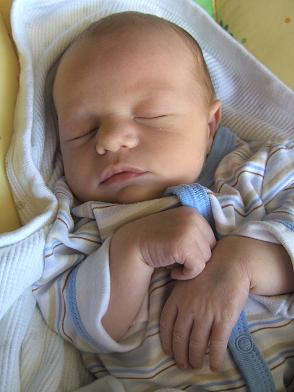
Linnea shared this morning how slow the nights go when she’s answering Micah’s need for frequent nursing, and how she longs for the sun to come up, indicating night’s end. Even though the demands on her as a mom increase once Skylar gets up in the morning, double-child daytime duty doesn’t overwhelm like single-child nighttime work.

New moms aren’t the only ones longing for dawn. Those who struggle with fear or loneliness seem to experience greater degrees of both during the night. Physical pain that torments the body and keeps a person from sleep is another reason to watch for the sunrise. Every life-negative looms larger during the night. Small concerns grow into overwhelming worry, keeping us from relaxing enough to drift into sleep.

God gives us specific encouragement for sleepless nights by reminding us he’s working on our behalf during those hours. He doesn’t get weary or bleary during the night or at any other time. Instead he offers ways to take advantage of these times when we feel completely alone and consumed by worry or are just plain exhausted. When our main concern is whether or not we’ll make it till morning, he lightens that darkness with promises that we will.

The psalmist David was plagued with middle-of-the-night sleeplessness, but his approach was to turn insomnia into conversation with God. He wrote, “I stay awake through the night, thinking about your promise [for mercy and rescue]. I rise early, before the sun is up. I cry out for help and put my hope in your words.” (Psalm 119:148 & 147)

During the night when we want to sleep and know we ought to, the only trustworthy comfort is trying to connect with God. Since we’re awake anyway, we might as well use the time for something valuable, like conversing with the Lord or meditating on his character. There’s no limit to what God can put on our minds, even to the point of removing our craving for sleep and substituting delightful discoveries on a spiritual level.

As for being short on sleep, God sometimes gives us double-value from little sleep. He expands our energy and ability to cope as if we actually slept long. Young moms like Linnea are perfect examples of this, sleeping in bits and pieces during the night then handling a busy agenda the following day. God will especially sustain and rejuvenate the one who is helping a brand new little one get a good start in life. But anyone who can’t sleep can count on God’s willingness to come into that night alongside them bringing unique blessing. And the good news is, weeks after nighttime rest has been restored, the middle-of-the-night gains from time spent focusing on God will remain permanently.

“Lying in bed, I think, ‘When will it be morning?’ But the night drags on, and I toss till dawn.” (Job 7:4)

“I reflect at night on who you are, O Lord.” (Psalm 119:55a)

The Center of the Universe

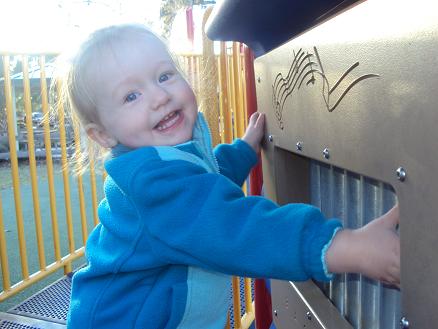
If there ever was an argument for original sin, it’s the lifestyle of a toddler. My theory is that a one year old becomes extra cute just when its time to begin disciplining her for wanting to dominate the world and all the people in it. My granddaughter Skylar fits that description perfectly with a sky-high cuteness factor but a stubborn determination to match. She’s totally captivating just as every one year old is, and can’t understand why she isn’t the center of the universe.

Louisa, Birgitta and I are not helping to increase her humility factor the way we cheer her every antic. We can’t get enough of her, and she knows it, playing us like a favorite tune. Tonight as we sat together in the living room, Skylar began turning in circles, making sure her eyes scanned our three faces and those of her parents as she spun around again and again, knowing she was bringing delight to us as we laughed at her. The world is her stage, and everyone she meets is her audience.

That’s probably why God sent Micah.

If there’s one thing we can be sure of, Skylar is not the center of the universe. That would be God. The fact that all of us used to be one year olds who agreed with Skylar’s point of view is solid evidence for original sin. When we were toddlers and didn’t get our way, tantrums erupted, a talent Skylar has mastered. Although most of us have had quite a few years to move away from such outbursts, sometimes tantrums still take over on the inside.

Enjoying life at center stage is most likely the most serious of all sins. If the world revolves around me, why would I need God? If I’m in the middle, that means God must be on the periphery. Although Skylar and all toddlers are too busy captivating audiences to care about that, I sure should.

As a college student I volunteered briefly with Campus Crusade. We used a pamphlet called “The Four Spiritual Laws” to explain the Gospel to interested people. One of the illustrations in the small booklet showed the “throne” of our lives with “S” for Skylar sitting on it, running the show. (Actually the “S” stands for self.) Everything else in life, according to the drawing, revolved around the decisions that came from the throne, a perfect picture of toddlerhood.

When the self dominates, Jesus is kept at a distance to be sure he doesn’t interfere with the self getting her way.

Thankfully, Micah’s arrival into Skylar’s life (as God’s instrument of change) will be her first opportunity to discover she isn’t at the center after all, an unwelcome bit of truth with which she will struggle mightily. Knowing Skylar, this wrestling match will continue for quite a while. But God knew about her strong will ahead of time and placed her with parents who are spiritually mature beyond their years, ready and eager to teach her the hard stuff. They’ll educate her, coach her, train her and cheer her on as she learns how difficult yet satisfying it is to submit her life to God. Best of all, they’ll model it day after day, year after year. They’ll also have an able assistant in baby brother Micah who will gradually edge his way toward Skylar’s throne/stage/universe.

As for the rest of us, when we see how blatantly Skylar or any other one year old unashamedly puts herself first, we laugh at such selfish presumption. I hope I’m able to laugh at myself the same way if I’m ever tempted to jump onto center stage. Besides, if Skylar and I were up there together, I wouldn’t stand a chance.

”Pride goes before destruction, and haughtiness before a fall.” (Proverbs 16:18)