
Lars has struck a deal with AT&T. He’s persuaded them to shut down Nate’s cell phone without a fee, even though he wasn’t at the end of the contract. Their willingness was, of course, because of Nate’s death. Where he is, he doesn’t need a phone. I realize that’s a good thing for him, but it’s not so good for us, because we can no longer call him. The 12 of us in his family are the people nearest and dearest to him in all the world, and it feels strange that none of us has any access to him. The problem lies in that phrase, “in all the world.” He’s out of our world and into another, and that’s the hard, cold truth we are struggling to accept.
Now Nate’s phone can’t make any more calls, but it still turns on, so today I decided to check his messages and texts to be sure there was nothing we needed to know. That felt like an invasion of privacy. Nate and I always trusted each other. We never opened each other’s mail and didn’t butt in on each other when the bathroom door was closed. Cell phones were also private. I didn’t check who he called or who called him. I never listened to his messages or read his texts, and he respected my phone privileges in the same manner. But today I plunged ahead, starting with the voice mails.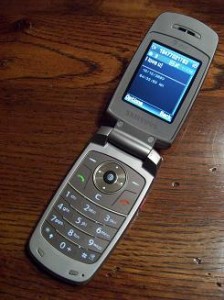
One after another, callers expressed shock at his cancer diagnosis and offered to help “in any way.” There were people from church, from the office, from the neighborhood and calls from relatives. Nate had touched lives in many categories.
Two months ago when he was listening to his messages, he found great encouragement in them, and today they were a comfort to me. I heard many “I love you’s” among the recordings. Even toward the end of his life, when he could no longer push the right phone buttons to release his messages, I would connect to voice mail for him, then put the phone to his ear. These callers will never know how valuable their support was to Nate.
After listening to the voice mail messages, I moved on to the texts. This was more difficult. Seeing the words on that tiny screen did something to me, and I started to weep.
“I’m thinking of you today and am sending my love.”
“I’m here to talk whenever you want.”
“I love you!”
“I’m praying for you, today and always.”
“You’re always in our thoughts.”
“We miss you very much and hope you can come back to work.”
“I hear things are pretty rough for you and am praying you will get relief from your pain.”
“Just a note that you got extra prayers said for you today.”
“I just want to tell you again how very much your friendship is appreciated.”
“I understand you have a lot going on, but I am here to help you in any way, with anything.”
“I appreciate you so much for all you do and for how gracious you are.”
“Please hang in there! We are praying very hard for you.”
Suddenly I longed to send a message to Nate as these people had, just a short one to connect one more time. But of course that wasn’t possible. A big part of the sadness after a loved one dies is the inability to communicate with that person again. Death brings complete separation.
We know very few details about what someone is experiencing after he dies, which makes the disconnect even more painful. I can’t ask a single question of Nate or get a quick glimpse at his new home in heaven. We can learn nothing more about him or what he’s doing right now. All communication has ended.
The last text on his phone, sent on November 3, says, “Sending best wishes and prayers your way, and hoping you have a good day.” November 3 did turn out to be a good day for Nate, since he took up residence in heaven before the end of it. And if I could communicate with him one more time I’d say, “Even though you’re gone, I still love you.”
“If anyone is in Christ, he is a new creation; the old has gone, the new has come!” (2 Corinthians 5:17)